Paystub Tax Calculator: Federal & State Tax Withholding Guide 2026
Paystub Tax Calculator: Federal & State Tax Withholding Guide 2026
You see the deductions on your pay stub — federal tax, state tax, Social Security, Medicare — but do you actually know how they're calculated? Understanding the math behind your paycheck deductions is the key to verifying accuracy, planning your finances, and avoiding tax surprises.
This comprehensive guide walks through every tax calculation that appears on your pay stub, provides the formulas used by payroll systems, and shows you real-world examples at different income levels.
How Paystub Tax Calculations Work
Every pay stub includes several types of mandatory tax withholding, calculated using current IRS and state tax tables. Here's an overview of each component:
| Tax Type | Rate/Range | Applied To | Annual Limit |
|---|---|---|---|
| Federal Income Tax | 10-37% (progressive) | Taxable income after exemptions | None |
| Social Security (OASDI) | 6.2% flat | Gross earnings | $176,100 in 2026 |
| Medicare | 1.45% flat | All gross earnings | None |
| Additional Medicare | 0.9% | Earnings over $200,000 | None |
| State Income Tax | 0-13.3% | Varies by state | Varies |
| Local/City Tax | 0-3.9% | Select cities only | Varies |
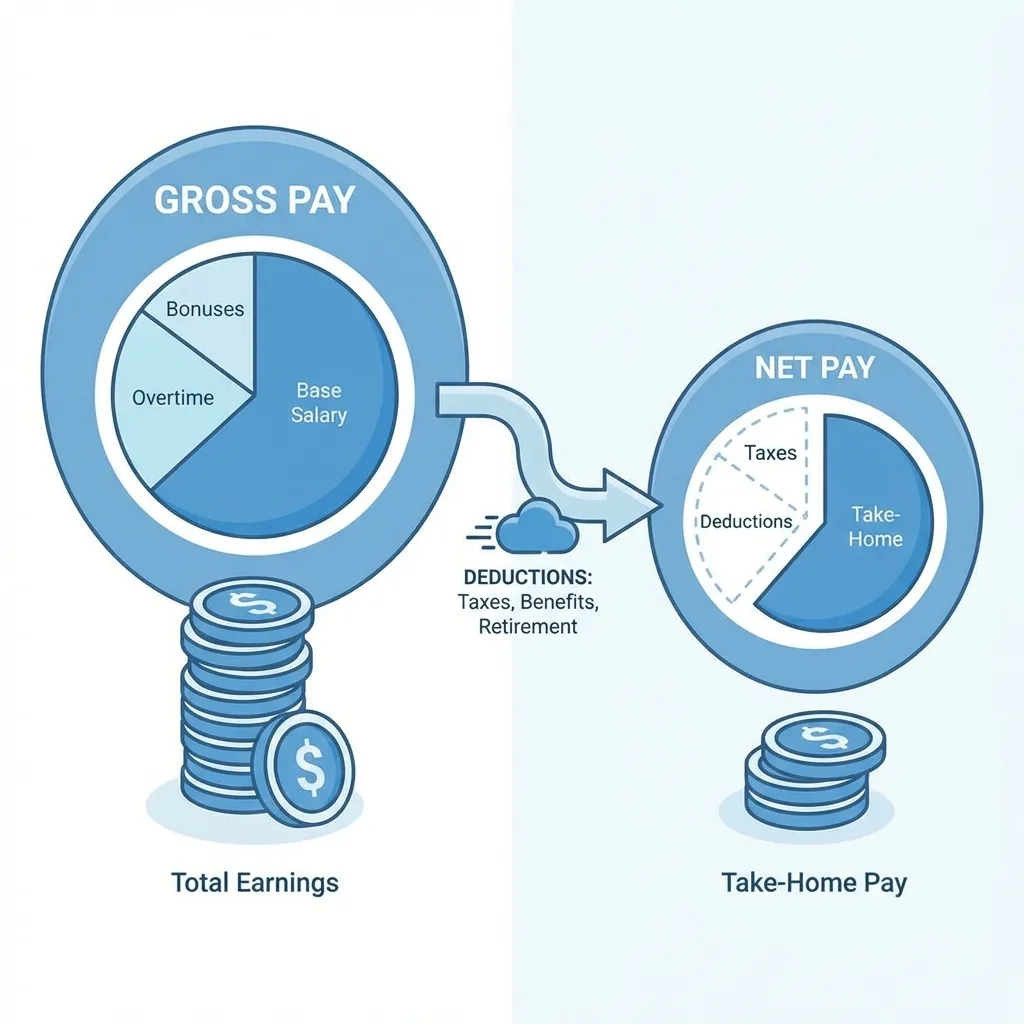
The typical American worker sees 20-35% of their gross pay go to taxes, depending on income level and state of residence. Learn more about how these deductions transform your gross pay into net pay.
Federal Income Tax: The Progressive Bracket System
Federal income tax is the most complex paycheck deduction because it uses a progressive bracket system — meaning different portions of your income are taxed at different rates.
2026 Federal Tax Brackets
Single Filer
| Taxable Income Range | Rate | Tax on Range | Cumulative Tax |
|---|---|---|---|
| $0 – $11,925 | 10% | $1,192.50 | $1,192.50 |
| $11,926 – $48,475 | 12% | $4,386.00 | $5,578.50 |
| $48,476 – $103,350 | 22% | $12,072.50 | $17,651.00 |
| $103,351 – $197,300 | 24% | $22,548.00 | $40,199.00 |
| $197,301 – $250,525 | 32% | $17,032.00 | $57,231.00 |
| $250,526 – $626,350 | 35% | $131,538.75 | $188,769.75 |
| Over $626,350 | 37% | — | — |
Source: IRS Revenue Procedure 2025-11
Married Filing Jointly
| Taxable Income Range | Rate |
|---|---|
| $0 – $23,850 | 10% |
| $23,851 – $96,950 | 12% |
| $96,951 – $206,700 | 22% |
| $206,701 – $394,600 | 24% |
| $394,601 – $501,050 | 32% |
| $501,051 – $751,600 | 35% |
| Over $751,600 | 37% |
How Federal Tax Is Calculated on Your Paycheck
Payroll systems use the percentage method from IRS Publication 15-T to estimate federal withholding each pay period:
- Annualize your pay period earnings — Multiply your gross pay by the number of pay periods per year
- Subtract the standard deduction — $15,000 for single filers, $30,000 for married filing jointly in 2026
- Apply the progressive brackets to the resulting taxable income
- De-annualize — Divide the annual tax by pay periods to get per-paycheck withholding
Example: $75,000 Annual Salary, Single Filer, Bi-Weekly (26 Periods)
| Step | Calculation |
|---|---|
| Gross pay per period | $75,000 ÷ 26 = $2,884.62 |
| Annualized | $75,000 |
| Minus standard deduction | $75,000 - $15,000 = $60,000 taxable |
| Tax on first $11,925 (10%) | $1,192.50 |
| Tax on $11,926-$48,475 (12%) | $4,386.00 |
| Tax on $48,476-$60,000 (22%) | $2,535.28 |
| Annual federal tax | $8,113.78 |
| Per-paycheck withholding | $312.07 |
Note: Your actual withholding may differ based on W-4 elections (additional withholding, dependents claimed, etc.).
FICA Taxes: Social Security & Medicare
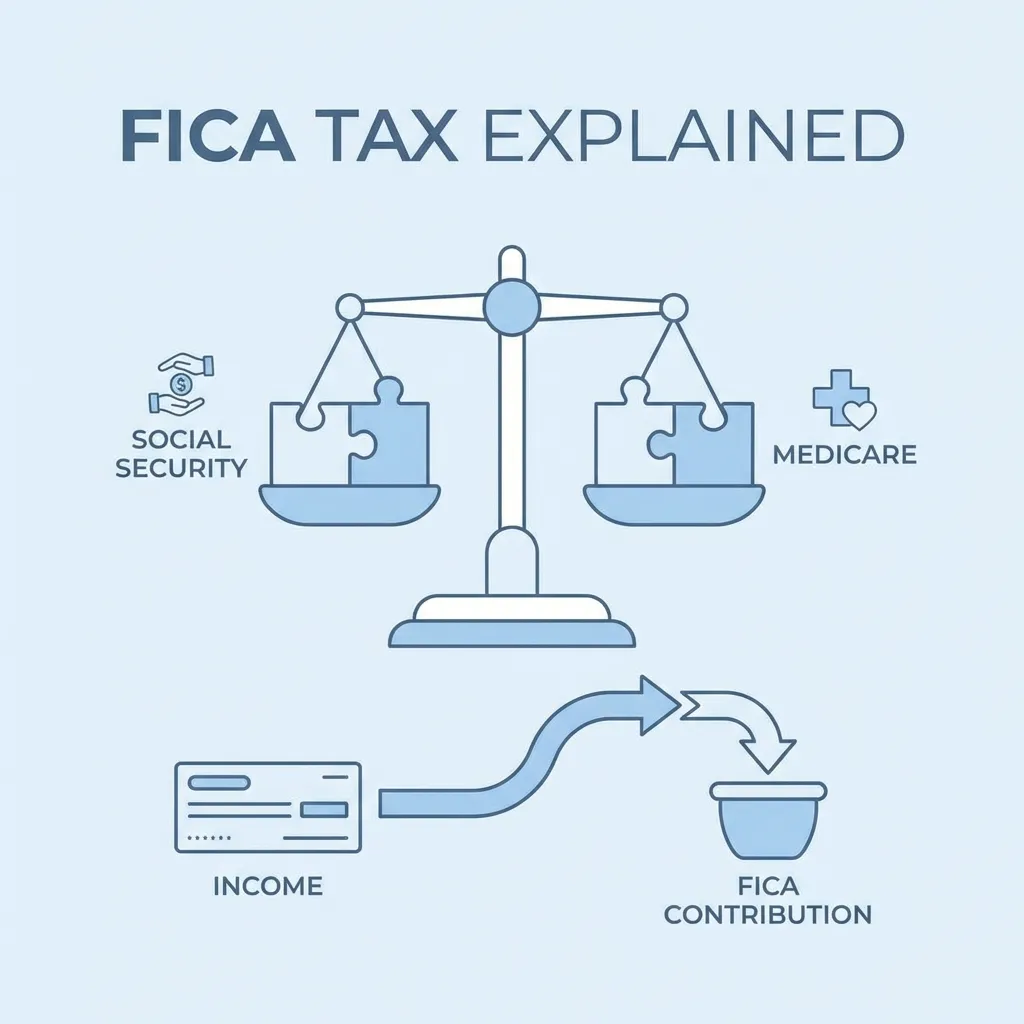
FICA taxes are the simplest to calculate because they use flat rates:
Social Security Tax (OASDI)
Social Security = Gross Pay × 6.2%
- Applied to the first $176,100 of annual earnings
- Maximum annual contribution: $10,918.20
- Once you hit the cap, withholding stops for the rest of the year
Medicare Tax
Medicare = Gross Pay × 1.45%
Additional Medicare = (Annual Income - $200,000) × 0.9% (if applicable)
- No income cap — applies to every dollar earned
- The Additional Medicare Tax kicks in at $200,000 for single filers
FICA Calculation Examples
| Annual Salary | Bi-Weekly Gross | SS (6.2%) | Medicare (1.45%) | Total FICA | FICA % |
|---|---|---|---|---|---|
| $40,000 | $1,538.46 | $95.38 | $22.31 | $117.69 | 7.65% |
| $60,000 | $2,307.69 | $143.08 | $33.46 | $176.54 | 7.65% |
| $75,000 | $2,884.62 | $178.85 | $41.83 | $220.68 | 7.65% |
| $100,000 | $3,846.15 | $238.46 | $55.77 | $294.23 | 7.65% |
| $150,000 | $5,769.23 | $357.69 | $83.65 | $441.35 | 7.65% |
State Income Tax: A 50-State Overview
State income tax varies dramatically. Here's a comprehensive breakdown:
States With NO Income Tax (9 States)
| State | Notes |
|---|---|
| Alaska | No income tax; no state sales tax |
| Florida | No income tax |
| Nevada | No income tax |
| New Hampshire | No tax on wages (taxes dividends/interest only) |
| South Dakota | No income tax |
| Tennessee | No tax on wages (taxes dividends/interest only) |
| Texas | No income tax |
| Washington | No income tax (has capital gains tax) |
| Wyoming | No income tax |
Common Flat-Rate States
| State | Rate | Tax on $5,000 Bi-Weekly |
|---|---|---|
| Colorado | 4.40% | $220.00 |
| Illinois | 4.95% | $247.50 |
| Indiana | 3.05% | $152.50 |
| Kentucky | 4.00% | $200.00 |
| Michigan | 4.25% | $212.50 |
| North Carolina | 4.50% | $225.00 |
| Pennsylvania | 3.07% | $153.50 |
| Utah | 4.65% | $232.50 |
Notable Progressive-Rate States
| State | Low Rate | Top Rate | Top Bracket Starts At |
|---|---|---|---|
| California | 1.00% | 13.30% | $1,000,000+ |
| New York | 4.00% | 10.90% | $25,000,000+ |
| New Jersey | 1.40% | 10.75% | $1,000,000+ |
| Oregon | 4.75% | 9.90% | $125,000+ |
| Minnesota | 5.35% | 9.85% | $193,240+ |
| Hawaii | 1.40% | 11.00% | $200,000+ |
States With Special Payroll Taxes
Some states have additional deductions beyond standard income tax:
| State | Special Tax | Rate |
|---|---|---|
| California | SDI (State Disability Insurance) | ~1.1% |
| New Jersey | SUI/SDI/FLI | ~0.5-1.0% combined |
| New York | SDI | ~0.5% |
| Hawaii | TDI (Temporary Disability Insurance) | ~0.5% |
| Rhode Island | TDI | ~1.1% |
Complete Tax Calculation: Two Real-World Scenarios
Scenario 1: $65,000 Salary in Texas (No State Tax)
| Line Item | Bi-Weekly Amount |
|---|---|
| Gross Pay | $2,500.00 |
| Federal Income Tax | -$226.04 |
| Social Security (6.2%) | -$155.00 |
| Medicare (1.45%) | -$36.25 |
| State Tax | $0.00 |
| Health Insurance | -$75.00 |
| 401(k) (6%) | -$150.00 |
| Total Deductions | -$642.29 |
| Net Pay | $1,857.71 |
| Effective Tax Rate | 16.7% (taxes only) |
Scenario 2: $85,000 Salary in California
| Line Item | Bi-Weekly Amount |
|---|---|
| Gross Pay | $3,269.23 |
| Federal Income Tax | -$340.40 |
| Social Security (6.2%) | -$202.69 |
| Medicare (1.45%) | -$47.40 |
| California State Tax | -$148.50 |
| California SDI (1.1%) | -$35.96 |
| Health Insurance | -$125.00 |
| 401(k) (5%) | -$163.46 |
| Total Deductions | -$1,063.41 |
| Net Pay | $2,205.82 |
| Effective Tax Rate | 23.7% (taxes only) |
The Impact: The same $85,000 salary produces very different take-home pay depending on state. Compare scenarios using our paystub generator to see your exact numbers.
Factors That Affect Your Tax Withholding
1. W-4 Filing Status
Your W-4 form determines which tax bracket schedule is used:
- Single or Married Filing Separately — Higher withholding
- Married Filing Jointly — Lower withholding (wider brackets)
- Head of Household — Middle ground
2. Dependents and Credits
Claiming dependents on your W-4 reduces withholding by reducing your estimated tax liability.
3. Additional Withholding
You can request extra dollars withheld per paycheck (W-4 Line 4c) if you want a larger tax refund or have additional income sources.
4. Pre-Tax Deductions
Contributions to 401(k), HSA, and health insurance reduce your taxable income before taxes are calculated — effectively lowering your tax withholding.
5. Multiple Jobs
If you hold multiple jobs simultaneously, you may need to check the "Two Jobs" box on your W-4 to avoid under-withholding.
Using Our Paystub Tax Calculator
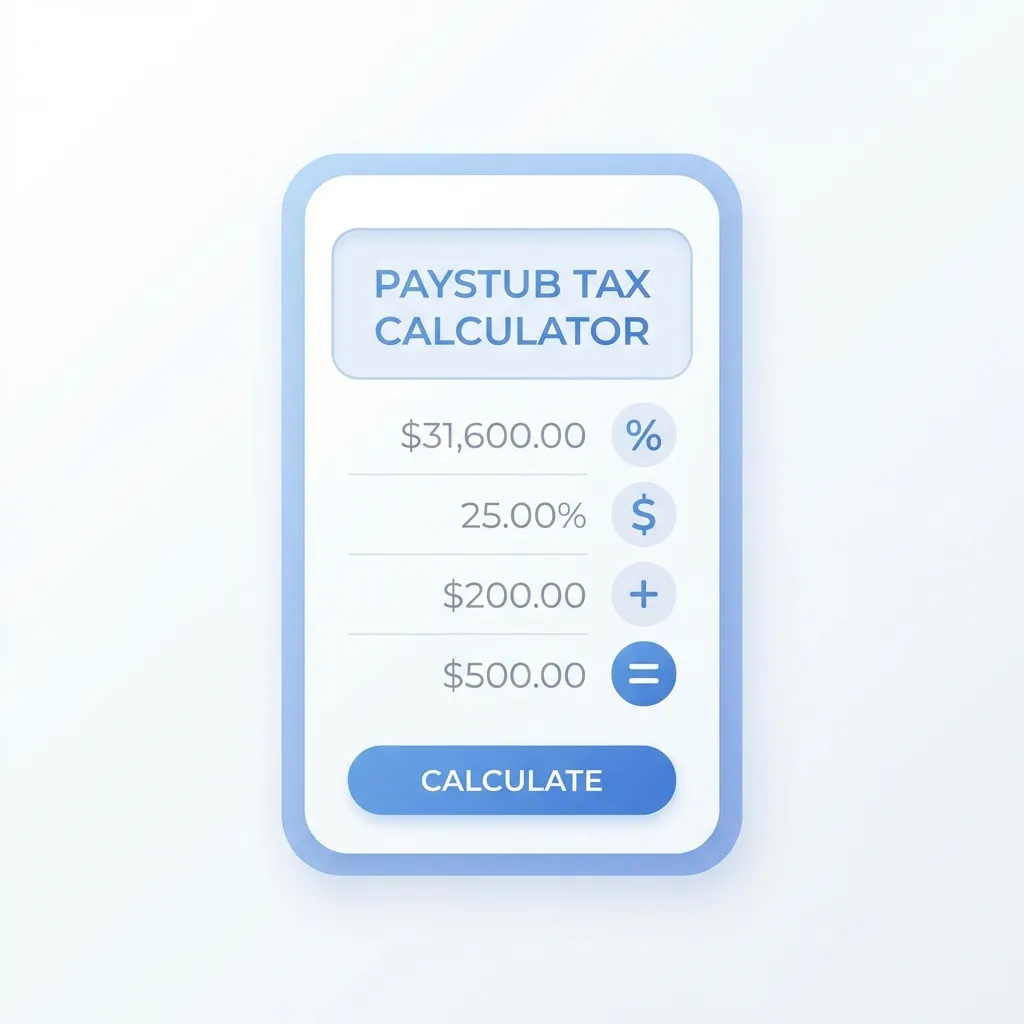
Our paystub generator automatically calculates every tax on your pay stub using current 2026 data:
✅ Federal income tax via IRS percentage method from Publication 15-T ✅ Social Security at 6.2% with $176,100 wage base limit ✅ Medicare at 1.45% with 0.9% Additional Medicare ✅ State income tax for all 50 states + DC ✅ State-specific taxes (CA SDI, NJ FLI, etc.) ✅ Live preview showing all calculations before you download
Frequently Asked Questions
Why is my federal tax different each pay period?
If your gross pay varies (due to overtime, bonuses, or hourly hours worked), your federal tax will change accordingly. The payroll system re-calculates federal withholding based on the annualized equivalent of each paycheck.
How do I reduce my tax withholding?
File a new W-4 with your employer claiming additional dependents or adjusting your filing status. Use the IRS Tax Withholding Estimator to determine the right amount.
What if too much tax is withheld?
You'll receive a refund when you file your annual tax return. To reduce over-withholding going forward, adjust your W-4.
What if too little tax is withheld?
You may owe taxes and potentially face an under-withholding penalty when you file. Increase withholding on your W-4 immediately or make estimated tax payments.
How do I calculate taxes if I'm self-employed?
Self-employed individuals pay self-employment tax (15.3% for FICA) plus income tax. Use our paystub generator to create pay stubs with accurate self-employment tax calculations.
Conclusion: Master Your Tax Calculations
Understanding how taxes are calculated on your pay stub empowers you to:
- ✅ Verify every deduction for accuracy
- ✅ Optimize your W-4 for the right withholding amount
- ✅ Plan your annual tax bill and avoid surprises
- ✅ Compare take-home pay across different states and salary levels
More guides: FICA Tax Explained • Gross Pay vs Net Pay • How to Read a Paystub
Sources & References
- IRS Publication 15-T — Federal Income Tax Withholding Methods
- IRS — Tax Inflation Adjustments for 2026
- IRS — Tax Withholding Estimator
- IRS — About Form W-4
- Social Security Administration — Contribution and Benefit Base
- IRS Topic 751 — Social Security and Medicare Withholding Rates
- IRS — Additional Medicare Tax
- IRS — Estimated Taxes

About ValidPaystubs Editorial Team
Articles on ValidPaystubs are written and maintained by the editorial team at Sweethelp LLC, the company that operates this site from Sheridan, WY. We are a small team, not a firm of accountants — we build the tool and document how US payroll figures work, citing the IRS and state revenue departments so you can check any number against its source. Nothing here is tax, legal or financial advice, and for a decision that matters you should talk to a licensed professional.
View Profile