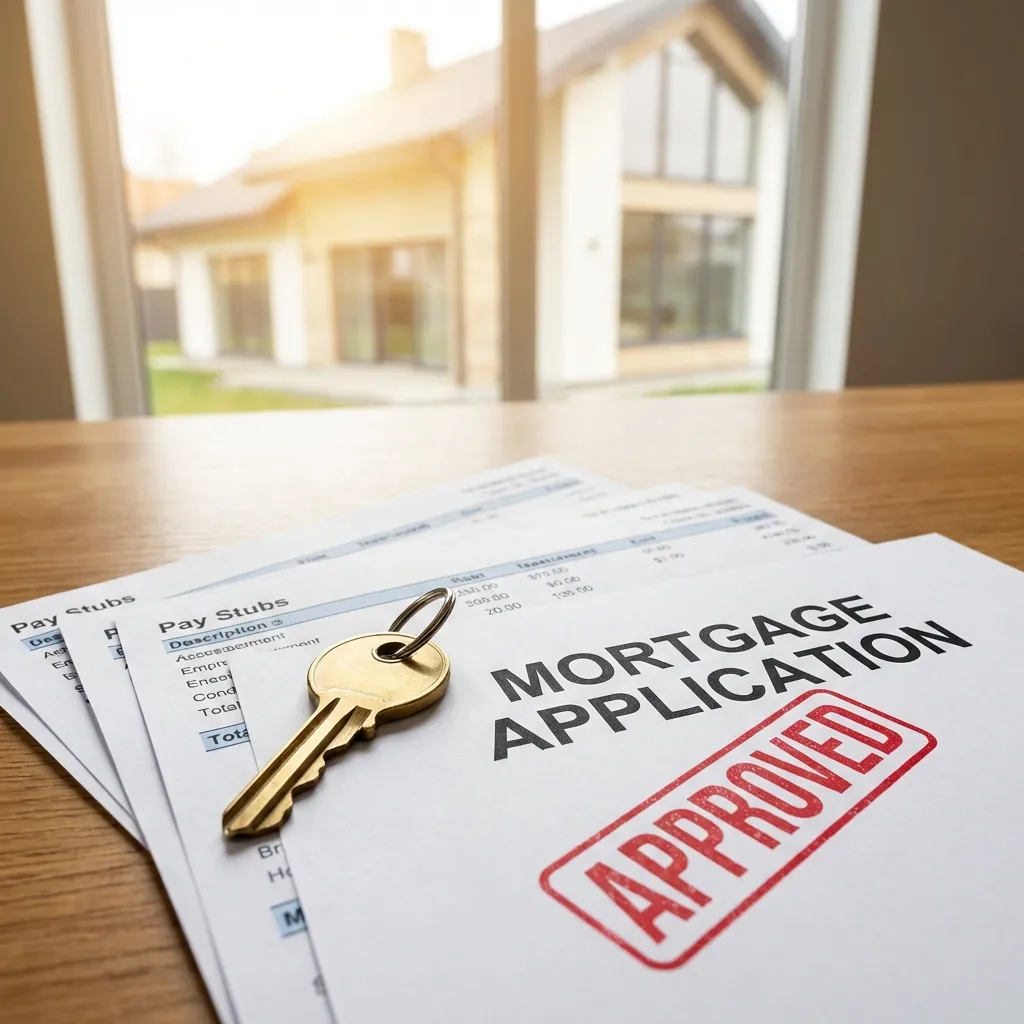
Proof of Income for Apartment: How to Get Approved Fast (2026 Guide)

Proof of Income for Apartment: How to Get Approved Fast (2026 Guide)
Finding the perfect apartment is exciting — until the landlord asks for proof of income. This requirement trips up millions of renters every year, especially freelancers, contractors, and gig workers who don't receive traditional pay stubs from an employer.
According to the Consumer Financial Protection Bureau (CFPB), income verification is a standard step in the rental application process. In competitive markets like New York, Los Angeles, and Miami, having your documentation ready can mean the difference between getting approved and losing the apartment to another applicant.
In this comprehensive guide, we'll explain exactly what landlords look for, which documents work best, how to provide proof of income for apartment applications even if you're self-employed, and common pitfalls to avoid.
Why Do Landlords Require Proof of Income?
Landlords have one primary concern: Will this tenant be able to pay rent every month for the full lease term?
Unlike mortgage lenders who can foreclose on a property, landlords face significant financial risk from non-paying tenants. Eviction proceedings can take months and cost thousands in legal fees and lost rent. Income verification is their primary defense against this risk.
The Income-to-Rent Ratio Rule
The standard rule in most rental markets:
Your gross monthly income must be at least 2.5x to 3x the monthly rent.
This ratio varies by market and landlord, but here's what it looks like in practice:
| Monthly Rent | Minimum Monthly Income (2.5x) | Minimum Monthly Income (3x) | Minimum Annual Salary |
|---|---|---|---|
| $1,000 | $2,500 | $3,000 | $30,000 – $36,000 |
| $1,500 | $3,750 | $4,500 | $45,000 – $54,000 |
| $2,000 | $5,000 | $6,000 | $60,000 – $72,000 |
| $2,500 | $6,250 | $7,500 | $75,000 – $90,000 |
| $3,000 | $7,500 | $9,000 | $90,000 – $108,000 |
Without proper documentation proving you meet this threshold, your application gets denied — regardless of how qualified you actually are.
What Documents Count as Proof of Income?
Landlords accept various forms of proof of income for apartment applications. Understanding which documents carry the most weight helps you prepare the strongest possible application.
✅ Tier 1: Strongest Documents (Preferred by Landlords)
| Document | Best For | Why It Works |
|---|---|---|
| Pay Stubs (2-3 most recent) | W-2 Employees | The gold standard — shows current employment, pay rate, deductions, and YTD totals |
| Self-Generated Pay Stubs | Self-Employed / Contractors | Created using a paystub generator. Legally valid when income is accurate |
| Employment Verification Letter | All Employees | Official letter from HR confirming position, salary, and employment date |
✅ Tier 2: Supporting Documents (Good Supplements)
| Document | Best For | Limitations |
|---|---|---|
| Bank Statements (3-6 months) | All applicants | Shows cash flow but doesn't distinguish income sources from transfers |
| Tax Returns (1-2 years) | Self-Employed | Proves annual income but not current employment status |
| 1099 Forms | Independent Contractors | Shows client payments but doesn't provide a complete income picture |
| Offer Letter | New Employees | Accepted for those starting a new job who don't have pay stubs yet |
| Social Security Award Letter | Retirees | Official annual benefit statement from SSA |
| Pension / Retirement Statements | Retirees | Shows ongoing income from retirement accounts |
❌ Documents Landlords Typically Reject
- Verbal confirmation — "I make $5,000/month" means nothing without documentation
- Venmo/PayPal/Cash App screenshots — Not considered professional documentation by most landlords
- Handwritten notes — No landlord accepts informal records
- Future income promises — "I'll have a job next month" or "I'm expecting a raise" won't work
- Cryptocurrency holdings — Most landlords don't consider crypto as income proof
Proof of Income for Self-Employed Renters
Self-employed individuals face the biggest challenge when providing proof of income for apartment applications. You don't have a traditional employer issuing pay stubs, and your income might vary month-to-month. The IRS Self-Employed Individuals Tax Center classifies you as your own employer — which means you need to handle your own income documentation.
Solution 1: Generate Professional Pay Stubs
If you pay yourself regularly from your business (as many LLC and S-Corp owners do), you can legally create your own pay stubs using a paystub generator.
This is the most effective solution because:
- Pay stubs are the format landlords understand best — they instantly know how to read and verify them
- They show gross income, taxes, and net pay clearly — providing the same data structure as employer-issued stubs
- They prove ongoing, current income — not just past earnings from tax returns
- Professional formatting builds trust — a clean PDF looks legitimate and reduces suspicion
When creating self-employed pay stubs, ensure:
- Your business name matches your state registration / DBA
- Tax calculations use current IRS withholding rates
- Net pay amounts match your bank deposits
- Year-to-date totals accumulate consistently
Solution 2: Build a Document Package
If you can't create pay stubs, provide a comprehensive package that paints a complete picture of your income:
- Last 2 years of tax returns (1040 + Schedule C) — shows annual income and consistency
- 6 months of bank statements — shows regular deposits and cash flow patterns
- 1099 forms from all clients — shows individual payer relationships
- CPA or accountant letter — professional third-party verification of stated income
- Client contracts — shows ongoing work commitments and expected future income
This "document stack" approach can substitute for pay stubs but requires more effort and may still be less convincing to landlords accustomed to reviewing simple pay stubs.
Solution 3: Offer Additional Assurances
If your income documentation is non-traditional, strengthen your application by offering:
- Larger security deposit (where legal — some jurisdictions cap deposits at 1-2 months' rent)
- Several months of rent prepaid
- A co-signer or guarantor with a strong W-2 income
- Proof of savings — bank or investment accounts showing a significant cash cushion
- Landlord references from previous rentals showing on-time payment history
What Landlords Look For in Pay Stubs
When reviewing your proof of income, experienced landlords and property management companies check specific details. Understanding their verification process helps you prepare bulletproof documentation:
1. Income Level
Does your gross monthly income meet the 2.5-3x rent requirement? This is the first and most critical filter. Landlords typically calculate monthly income by taking your per-period gross pay × number of periods per month.
2. Employment Tenure
How long have you been at this job or running this business? Longer tenure = lower perceived risk. Applicants with less than 6 months at their current position may face additional scrutiny or be asked for supplementary documentation.
3. Income Consistency
Are the earnings similar across multiple pay stubs? Wildly fluctuating gross pay raises concerns about income stability — especially important for freelancers whose income may vary.
4. YTD (Year-to-Date) Accuracy
The YTD column reveals the full story. A June pay stub showing only $5,000 YTD when you claim $5,000/month income doesn't add up — the expected YTD should be approximately $30,000. This mathematical cross-check is the primary method professional verification services use.
5. Professional Format
Hand-created documents or simple spreadsheets immediately raise suspicion. Professional pay stubs from recognized payroll formats (ADP, Gusto, Paychex, or professional paystub generators) inspire confidence and reduce follow-up questions.
6. Mathematical Accuracy
Tax deductions must be mathematically correct based on current IRS tax tables:
- Social Security: exactly 6.2% of gross pay (up to the $176,100 wage base limit)
- Medicare: exactly 1.45% of gross pay
- Federal income tax: based on filing status and progressive brackets
- State income tax: varies by state (9 states have no income tax)
If your gross is $5,000 but net is $4,800 (only $200 in deductions), that's an obvious red flag — real deductions should account for approximately 20-30% of gross pay.
Red Flags That Get Applications Rejected
Landlords and property managers have reviewed thousands of applications. They've developed a keen eye for suspicious documentation:
| Red Flag | Why It's Suspicious |
|---|---|
| Round dollar amounts for net pay (e.g., "$3,000.00") | Real payroll always produces cents due to tax calculations |
| Missing tax deductions or only 1-2 line items | Legitimate stubs itemize federal tax, state tax, Social Security, Medicare |
| Inconsistent employer info across pay stubs | Every stub should have identical employer name, address, and formatting |
| YTD that doesn't match math (period pay × periods elapsed) | Suggests the document was created for the application |
| Multiple pay stubs with different fonts/layouts | Stubs from the same employer should be identical in formatting |
| No corresponding bank deposits for the net pay amounts | Digital verification catches this if bank statements are also required |
| Stock photos or generic company logos | Professional landlords reverse-image-search logos |
Tips for Getting Approved Faster
Tip 1: Provide More Documentation Than Required
If they ask for 2 pay stubs, provide 3. Over-documentation shows you have nothing to hide and reduces follow-up requests.
Tip 2: Include a Brief Cover Letter
A short explanation of your employment situation helps — especially for non-traditional income:
Example: "I am self-employed as a software consultant operating under [Your Business Name] LLC, registered in [State]. Attached are my 3 most recent self-generated pay stubs showing consistent monthly income of $8,000, along with 6 months of bank statements and my most recent tax return confirming annual income of $96,000."
Tip 3: Have Documents Ready Before Apartment Hunting
Hot apartments go fast — especially in competitive markets. Having your complete proof of income package ready to submit immediately shows the landlord you're serious and organized. Prepare your documents before you start viewing properties.
Tip 4: Match Your Bank Statements to Pay Stubs
If you're submitting both documents, ensure the net pay on your stubs matches specific deposits in your bank statements. Landlords who cross-reference these documents will be instantly reassured by matching amounts and dates.
Tip 5: Apply Quickly
In competitive markets, applications are reviewed on a first-come, first-served basis. Having documentation ready lets you apply the same day you view the apartment.
Frequently Asked Questions
What if I just started a new job and don't have pay stubs yet?
Provide your offer letter showing your salary, along with a letter from HR confirming your start date and position. Most landlords accept this combination, though some may ask for the pay stubs once your first paycheck arrives.
Can I use my spouse's or partner's income?
Yes! If applying together, combined household income counts toward the income requirement. Both applicants should provide their own pay stubs or income documentation.
What if my income varies month to month?
Show 6 months of pay stubs or bank statements to demonstrate that your average income meets requirements. Include a brief written explanation of your work (seasonal, project-based, commission, etc.) and provide tax returns showing stable annual income.
Is it legal to create my own pay stubs for an apartment application?
Yes, if you're self-employed. Creating pay stubs that accurately reflect your real income is entirely legal. It becomes illegal only if you fabricate or inflate the income figures. Read our full guide: Can I Make My Own Pay Stubs?
How recent do my pay stubs need to be?
Most landlords want pay stubs from the last 30-60 days. Anything older than 90 days is usually rejected because it doesn't prove current employment and income.
What if my employer won't provide pay stubs?
While most states require employers to provide pay stubs, some don't. Check our state-by-state requirements guide. You can also use bank statements as an alternative or reach out to your state's labor department.
Do I need different proof of income for different apartment types?
Private landlords may accept less formal documentation, while large property management companies and corporate-owned buildings typically have strict requirements. Corporate applications almost always require official pay stubs.
Conclusion: Get Your Proof of Income Ready Today
Don't let documentation derail your dream apartment. Whether you're a W-2 employee with pay stubs on file, a self-employed professional who needs to generate your own, or a retiree with pension statements, having proper proof of income for apartment applications is essential.
The key to success: prepare your documentation before you start apartment hunting, ensure every number is accurate, and present everything in a professional format that landlords can verify quickly.
Self-employed? Create professional pay stubs in under 2 minutes using ValidPaystubs.
ValidPaystubs helps thousands of renters create professional, accurate income documentation that landlords trust.
Sources & References
- Consumer Financial Protection Bureau — Renting a Home
- FTC — Renting an Apartment
- IRS — Self-Employed Individuals Tax Center
- IRS Publication 15 (Circular E) — Employer's Tax Guide
- IRS Publication 15-T — Federal Income Tax Withholding Methods
- Social Security Administration — Contribution and Benefit Base
- IRS — How Long Should I Keep Records?

About ValidPaystubs Editorial Team
Articles on ValidPaystubs are written and maintained by the editorial team at Sweethelp LLC, the company that operates this site from Sheridan, WY. We are a small team, not a firm of accountants — we build the tool and document how US payroll figures work, citing the IRS and state revenue departments so you can check any number against its source. Nothing here is tax, legal or financial advice, and for a decision that matters you should talk to a licensed professional.
View Profile