California Payroll Taxes: Your Essential Guide for Employers and Employees

For employees and employers in California, payroll taxes involve both federal and state components. In California, employers withhold federal income tax, FICA (Social Security and Medicare), and state personal income tax (PIT) from employee wages, while also paying federal unemployment (FUTA), state unemployment (SUI), and employment training tax (ETT). Employees contribute to SDI (State Disability Insurance) and, of course, their personal income tax.
Navigating payroll taxes in the Golden State can feel like untangling a particularly stubborn knot. It's complex. Believe me, Countless business owners and employees scratching their heads over paycheck deductions and employer contributions. But it doesn't have to be a mystery. My goal here's to demystify "how much payroll tax in California" actually entails for everyone involved.
This isn't just about compliance; it's about understanding where your money goes. For businesses, accurate payroll tax calculation and timely remittance are non-negotiable. Get it wrong, and penalties can pile up fast. For employees, knowing what those alphabet soup deductions on your pay stub mean empowers you. Let's break it all down, piece by piece.
Federal Payroll Taxes: The Foundation You Can't Ignore
Before we even get to California's specific rules, we've to talk about federal payroll taxes. These apply across the entire U.S., regardless of which state you operate in or live in. They're the bedrock.
FICA: Social Security and Medicare
FICA stands for the Federal Insurance Contributions Act. It's essentially two separate taxes rolled into one, funding Social Security and Medicare benefits.
- Social Security Tax: This is 6.2% for both the employer and the employee, up to an annual wage base limit. For 2026, let's assume the wage base is $170,000 (it changes annually). This means any earnings above that amount aren't subject to Social Security tax.
- Medicare Tax: This one is 1.45% for both the employer and the employee, and there's no wage base limit. Every dollar an employee earns is subject to Medicare tax.
- Additional Medicare Tax: High earners have an extra layer. Employees earning above a certain threshold ($200,000 for single filers, $250,000 for married filing jointly) pay an additional 0.9% Medicare tax. Employers don't match this extra portion.
So, employees pay a combined 7.65% (6.2% + 1.45%) on most earnings, and employers match that 7.65%. If you're self-employed, you're on the hook for both halves, a total of 15.3% – that's called SECA (Self-Employment Contributions Act) tax. Quick sidebar: This is why many independent contractors budget a significant chunk of their income for taxes.
FUTA: Federal Unemployment Tax Act
FUTA is an employer-only tax. Employees don't pay into this one. It funds unemployment benefits for workers who've lost their jobs. The federal unemployment tax rate is generally 6.0% on the first $7,000 of each employee's wages. However, most employers get a credit of 5.4% for paying their state unemployment taxes on time, effectively reducing the net FUTA rate to 0.6%. This credit is a big deal for businesses. More details are available directly from the IRS Publication 15, Employer's Tax Guide.
California State Payroll Taxes: The Golden State's Specifics
Now, let's talk California. Our state has its own set of payroll taxes that employers must collect, contribute, and report. These are vital for supporting state programs like unemployment insurance, disability benefits, and, of course, state government operations.
State Unemployment Insurance (SUI)
Like FUTA, SUI is an employer-paid tax. It contributes to the state fund that provides temporary financial assistance to eligible workers who become unemployed through no fault of their own. The rates vary widely based on an employer's experience rating – how many former employees have claimed unemployment benefits. New employers usually start with a specific rate for a few years before an experience rating is established.
The taxable wage limit for SUI in California is currently $7,000 per employee per year. This means employers pay SUI tax only on the first $7,000 earned by each employee annually, regardless of their total yearly income. Rates can range from 1.5% to 6.2% for experienced employers, and new employers generally pay 3.4% for a couple of years. You can always check the latest rates and specifics on the California Employment Development Department (EDD) website.
Employment Training Tax (ETT)
This is a small, employer-paid tax that funds job training programs for employees. The ETT rate is a tiny fraction of a percent (currently 0.1%) on the same $7,000 taxable wage base as SUI. It's a minor line item, but it's there.
State Disability Insurance (SDI)
Here's a significant one for employees. Unlike SUI and ETT, SDI is paid by employees through payroll deductions. It provides short-term wage replacement benefits to eligible workers who are unable to work due to a non-work-related illness or injury, or for family leave (Paid Family Leave, PFL).
The SDI rate and wage base can change each year. For example, in 2024, the rate was 1.1% with no taxable wage limit, meaning employees paid SDI on all their wages. This is a big change from prior years and something I've seen catch many employers off guard. It's for employers to stay on top of these annual adjustments. Do you know if your current payroll system automatically updates for these changes? If not, you could be under-withholding.
California Personal Income Tax (PIT) Withholding
California has a progressive income tax system, meaning higher earners pay a higher percentage. Employers are responsible for withholding state income tax from employee paychecks, just like federal income tax. The amount withheld depends on:
- The employee's gross wages.
- Their filing status (single, married, head of household).
- The number of allowances claimed on their Form DE 4 (California's version of the W-4).
- Any additional withholding amounts requested.
These deductions are for employees to avoid a big tax bill come tax season. Understanding your pay stub, including these deductions, is super important. If you need a refresher on any of these terms, our payroll glossary is a great place to start.
Here's a quick comparison of the main federal and state payroll taxes:
| Tax Type | Who Pays? | What It Funds | Taxable Wage Base (2026 est.) | Rate (2026 est.) |
|---|---|---|---|---|
| Federal | ||||
| FICA - Social Security | Employer & Employee | Retirement, disability, survivor benefits | $170,000 | 6.2% each |
| FICA - Medicare | Employer & Employee | Hospital insurance | No limit | 1.45% each |
| FUTA | Employer only | Federal unemployment benefits | $7,000 | 0.6% (net) |
| California State | ||||
| SUI | Employer only | State unemployment benefits | $7,000 | Varies (e.g., 3.4% new employer) |
| ETT | Employer only | Employment training programs | $7,000 | 0.1% |
| SDI | Employee only | State disability & paid family leave benefits | No limit | Varies (e.g., 1.1% in 2024) |
| CA PIT Withholding | Employee only | State government services | No limit | Progressive rates (varies) |
Breaking Down Employee vs. Employer Shares
It's clear from the table that payroll taxes aren't just one lump sum. There are distinct portions.
- Employee-Paid Taxes: These are withheld directly from an employee's gross wages. They include federal income tax, FICA (Social Security & Medicare), California PIT, and SDI. When you see a smaller net pay than your gross, these deductions are why.
- Employer-Paid Taxes: These are additional costs of employing someone. They aren't deducted from employee wages but are paid by the business itself. These include FICA (the employer's matching portion), FUTA, SUI, and ETT.
The total cost of an employee to a business is always higher than their gross wage due to these employer-paid taxes. It's a critical financial consideration for any business owner. Accurately tracking these deductions and contributions is paramount for both compliance and sound financial management. If you need a professional pay stub right now, you can create one in under 2 minutes.
Special Considerations for California Businesses
California has some unique quirks that other states might not. Staying aware of these is key to smooth operations.
New Hire Reporting
Employers in California must report all new hires or rehires to the EDD within 20 days of their start-of-work date. This isn't strictly a "tax," but it's a mandatory payroll-related compliance step. This reporting helps with child support enforcement and detecting unemployment fraud.
Independent Contractors vs. Employees: The AB5 Impact
This is a hot topic in California, and it's something I've spent a lot of time advising clients on. California's Assembly Bill 5 (AB5) significantly tightened the rules for classifying workers as independent contractors. Now, most workers must be treated as employees unless they meet a strict "ABC test." Misclassifying a worker can lead to huge penalties, back taxes, and fines for businesses. If you're using contractors, you need to be very, very careful here. We've discussed the importance of proper classification in related posts, for example, comparing different pay stub providers and their features, which often touches on worker types, as seen in Validpaystubs Vs Formpros.
The Indispensable Role of Pay Stubs
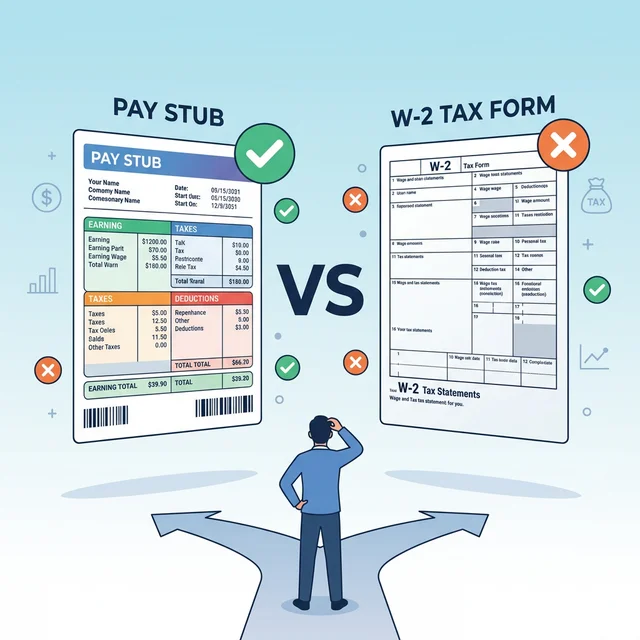
All these taxes and deductions? They're reflected on an employee's pay stub. A clear, accurate pay stub isn't just a nice-to-have; it's a legal requirement in California and a vital communication tool.
For employees, it's your record of earnings, taxes withheld, and other deductions. It helps you understand your net pay. For employers, it's proof of compliance with wage and hour laws and tax withholding obligations. It also serves as a document for employees needing to verify income for loans, mortgages, or apartment applications. Check out our discussion on the Benefits Of Accurate Pay Stubs For Mortgages.
Without proper pay stubs, tracking these complex tax calculations would be nearly impossible. If you need to quickly show proof of your earnings and deductions, a reliable proof of income generator can be incredibly helpful. That's why tools that help you generate your paystub now are so popular.
Common Payroll Tax Mistakes to Avoid
In my experience, even seasoned businesses sometimes trip up on the basics. Here are some of the most frequent errors I've observed:
- Misclassifying Workers: We just touched on this, but it's worth reiterating. Treating an employee as an independent contractor to avoid payroll taxes is a serious offense in California. The state EDD is aggressive in auditing this.
- Incorrect Withholding Amounts: Failing to update employee W-4s (federal) or DE 4s (state), or using outdated tax tables. This can result in employees owing a lot of money at year-end or receiving unexpectedly large refunds.
- Missing Filing and Payment Deadlines: Federal and state payroll taxes have strict schedules (quarterly, monthly, sometimes even semi-weekly). Miss a deadline, and you'll likely face penalties and interest.
- Inadequate Record-Keeping: Not keeping detailed records of wages paid, taxes withheld, and deposits made. The IRS and EDD require specific records for several years. Can your current system generate reports on demand? (Just wondering.)
Staying Compliant: My Advice as Your Consultant
Managing payroll taxes, especially in a state like California, isn't a set-it-and-forget-it task. Laws change. Rates shift. What worked last year might not work this year.
Here are my top recommendations for staying on the right side of the EDD and IRS:
- Invest in Reliable Payroll Software: This is probably the single best piece of advice I can offer. Good payroll software automatically calculates withholdings, tracks employer contributions, and helps with filing deadlines. It takes a huge burden off your shoulders. For example, many businesses find value in learning How To Make Pay Stub On Quickbooks.
- Stay Informed: Subscribe to EDD and IRS updates. Follow payroll news. Ignorance isn't bliss tax compliance.
- Conduct Regular Audits: Periodically review your payroll processes. Are your employee classifications correct? Are your tax calculations accurate? A small review now can prevent big problems later.
- Consult a Professional: If you're a small business owner feeling overwhelmed, don't hesitate to work with a CPA or payroll specialist. It's often more cost-effective than trying to figure it all out yourself and risking costly errors. Small business resources from the SBA can also point you in the right direction.
Remember, the goal isn't just to pay the taxes; it's to pay the right taxes, on time, every time. If you ever need to quickly generate a professional pay stub to keep your records in order or for your employees, feel free to try our free paystub maker.
Frequently Asked Questions
What are the main types of payroll taxes in California?
California payroll taxes include State Unemployment Insurance (SUI), Employment Training Tax (ETT), State Disability Insurance (SDI), and California Personal Income Tax (PIT) withholding. These are in addition to federal payroll taxes like FICA (Social Security and Medicare) and FUTA (Federal Unemployment Tax Act).
Who pays SDI in California?
State Disability Insurance (SDI) in California is paid entirely by the employee through payroll deductions. Employers withhold the SDI contributions from each employee's gross wages and remit them to the state. The rate and taxable wage base can change annually.
Are independent contractors subject to California payroll taxes?
No, generally, independent contractors aren't subject to standard payroll taxes like SUI, ETT, or SDI withholding. they're responsible for paying their own self-employment taxes (which include FICA equivalents) and estimated state and federal income taxes. However, it's critical to properly classify workers to avoid penalties.
what's the employer's responsibility for California payroll taxes?
Employers in California are responsible for withholding federal and state income taxes and employee-paid SDI. They also pay their matching portion of FICA, plus FUTA, SUI, and ETT. , employers must remit all these taxes to the correct agencies on time and file required reports.
Sources
- Employer's Tax Guide (Publication 15) — Internal Revenue Service
- Payroll Tax Information — California Employment Development Department
- Employer Payroll Taxes: A Guide for Small Business Owners — Gusto
- Understanding California's Employee Classification Laws (AB5) — Nolo
- How to Pay Independent Contractors — U.S. Small Business Administration

About ValidPaystubs Editorial Team
Articles on ValidPaystubs are written and maintained by the editorial team at Sweethelp LLC, the company that operates this site from Sheridan, WY. We are a small team, not a firm of accountants — we build the tool and document how US payroll figures work, citing the IRS and state revenue departments so you can check any number against its source. Nothing here is tax, legal or financial advice, and for a decision that matters you should talk to a licensed professional.
View Profile