Can I Use My Check Stub to File Taxes?

Can you use a check stub to file taxes? No, you generally can't use a check stub to file your federal or state income tax returns. Your check stubs are excellent records of your earnings and deductions throughout the year, but the IRS and state tax authorities require official documents like Form W-2, Wage and Tax Statement, from your employer for accurate reporting.
Understanding the Difference: Pay Stubs vs. Official Tax Forms
This question comes up a lot. Like, a lot. Clients get really confused about the role of their pay stubs come tax season. It’s an honest mistake, and it stems from misunderstanding what each document is for. Both are important. They just serve different purposes.
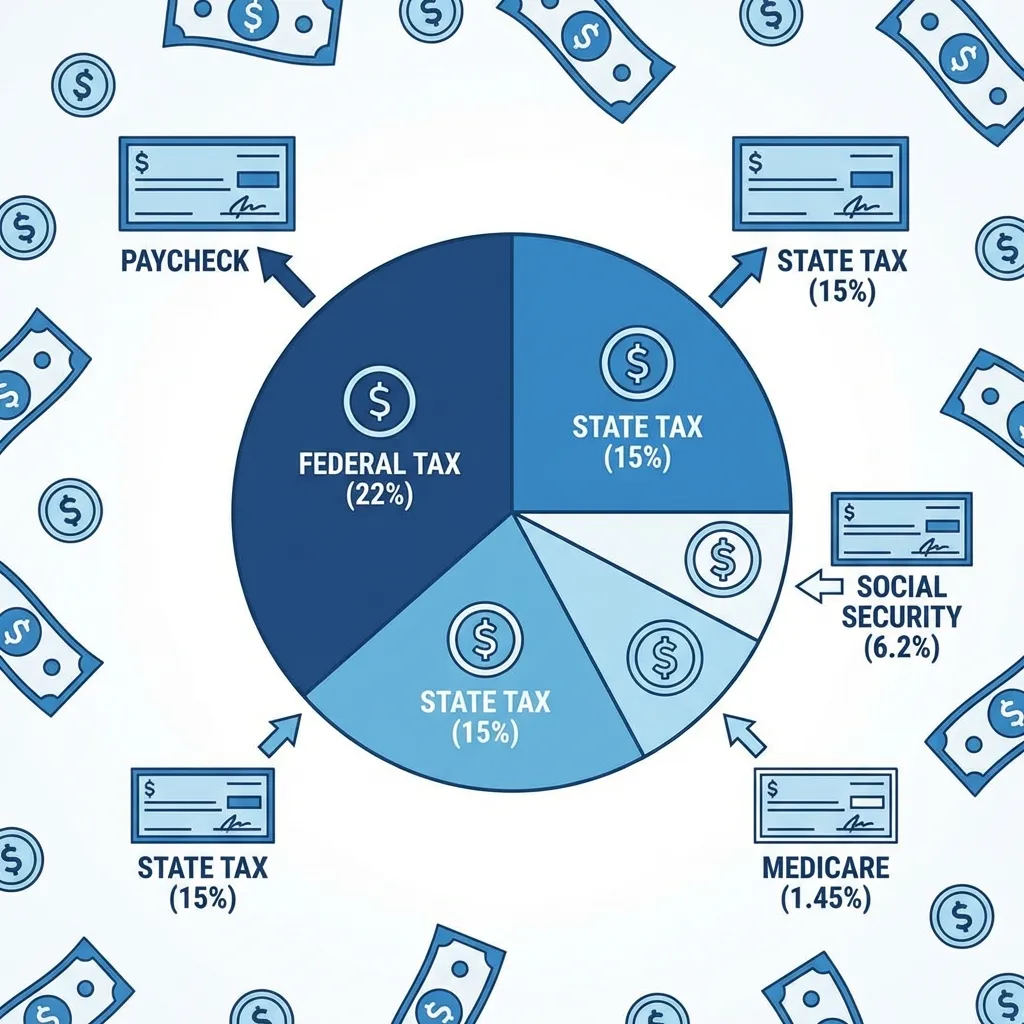
Your pay stub (or check stub, same thing) is a detailed record of your gross pay, deductions (like federal income tax, state tax, Social Security, Medicare, 401k contributions, health insurance premiums), and net pay for a specific pay period. It’s a snapshot. You get one every time you’re paid. These are fantastic for personal financial tracking, confirming your take-home pay, and seeing how much you've contributed to your retirement plan so far. They're also essential when you need proof of income generator for a loan application or renting an apartment.
An official tax form, like a W-2, is different. Your employer issues this once a year, typically by January 31st. This form summarizes your entire year's wages, tips, other compensation, and the total amount of taxes withheld for federal, state, and local governments. This annual summary is what the IRS and state tax agencies need to process your return. It's the official word.
Why Your Check Stubs Aren't Enough for Filing
Think of it this way: your pay stubs are like individual chapters in a book. Each chapter tells you what happened in that specific timeframe. The W-2, on the other hand, is the entire book's summary – the CliffsNotes version, if you'll, but approved by the publisher (your employer) and mandated by the government.
The IRS relies on employers to report wage and tax information accurately and directly to them using official forms. They cross-reference the W-2s submitted by employers with the information you provide on your tax return. If you were to file using only your pay stubs, the numbers you report wouldn't match the numbers the IRS has on file from your employer's W-2 submission. This mismatch is a red flag. It can lead to delays, audits, or notices from the IRS asking for clarification. Nobody wants that hassle, right?
Here's the thing though — while you can't file with them, your pay stubs are incredibly helpful tools. They can help you verify the accuracy of your W-2 when it arrives. If the year-to-date totals on your final pay stub don't align with the numbers on your W-2, that's a sign something might be off. You'd want to contact your employer to get it corrected before filing.
The Power of the W-2: Your Key to Tax Filing
The W-2 is the document for reporting your employment income. It breaks down your earnings into various boxes, clearly showing gross wages (Box 1), Social Security wages (Box 3), Medicare wages (Box 5), and the federal income tax withheld (Box 2), among other things. Each box corresponds to a specific line item on your Form 1040.
Here’s a quick comparison:
| Feature | Pay Stub (Check Stub) | Form W-2 |
|---|---|---|
| Purpose | Proof of income, personal record of earnings/deductions per pay period | Official annual summary for tax filing |
| Frequency | Issued each pay period (e.g., weekly, bi-weekly) | Issued once a year by January 31st |
| Issuer | Employer | Employer |
| Recipient | Employee | Employee, IRS, State/Local Tax Departments |
| Filing Usage | can't be used to file taxes | Required for filing taxes |
| Detail Level | Detailed breakdown for one pay period | Total annual earnings and withholdings for all pay periods |
What if You Don't Have Your W-2?
This happens. Employers go out of business, mail gets lost, you move, and sometimes people just misplace things. Don't panic. You've got options.
- Contact Your Employer: The first step is always to reach out to your employer (or former employer) directly. Ask for a copy of your W-2. Most companies can provide duplicates, often electronically through their payroll portal.
- Contact the IRS: If you can't get your W-2 from your employer, you can contact the IRS directly. They can sometimes send you a copy of your wage and income transcript, which includes W-2 information. Call them at 1-800-829-1040 or visit their website for details on how to request a wage and income transcript.
- File Form 4852: As a last resort, if the tax deadline is looming and you still haven't received your W-2 after trying everything else, you can file Form 4852, Substitute for Form W-2, Wage and Tax Statement. On this form, you'll estimate your wages and withholding using your pay stubs. This is where those check stubs become incredibly valuable! You'll need all those individual records to accurately complete Form 4852. Just remember, this is a substitute, not the primary method.
- Gather all your pay stubs for the year.
- Add up your gross wages, Social Security wages, Medicare wages, and all federal, state, and local taxes withheld.
- Complete Form 4852 with these totals.
- Attach a statement explaining the steps you took to get your W-2.
- Submit it with your tax return.
Real talk: I've seen many people underestimate the importance of keeping their pay stubs throughout the year. They aren't just pieces of paper; they're your primary record until your W-2 arrives. If you need a professional pay stub right now, you can create one in under 2 minutes.
The Self-Employed and 1099s
This discussion focuses on W-2 employees. But what about freelancers, independent contractors, or small business owners? You won't get a W-2. Instead, if you earned $600 or more from a single client or business, they should issue you a Form 1099-NEC (Nonemployee Compensation) or Form 1099-MISC.
If you're self-employed, your "check stubs" are really your invoices and payment records. You're responsible for tracking your own income and expenses, paying estimated taxes throughout the year, and ultimately reporting everything on Schedule C (Form 1040). This is a whole different ballgame. You can learn more about managing your payroll needs and tax obligations on our payroll blog.
Preparing for a Smooth Tax Season
My advice? Start early. Don't wait until April 14th.
Here are some practical steps to make tax season less stressful:
- Keep Good Records: Save all your pay stubs, even if you get direct deposit. Digital copies are fine, but make sure they're organized. If you ever need to calculate specific deductions or verify earnings, they're gold. You can even use a paycheck calculator to double-check your withholdings throughout the year.
- Verify Your W-2: As soon as your W-2 arrives, compare it to your final pay stub's year-to-date totals. Look at Box 1 (Wages, Tips, Other Compensation), Box 3 (Social Security Wages), Box 5 (Medicare Wages), and especially Box 2 (Federal Income Tax Withheld). If there's a discrepancy, contact your employer immediately for a corrected W-2 (Form W-2c).
- Understand Payroll Terminology: A quick glance at a payroll glossary can help you decode those abbreviations and numbers on your pay stub and W-2. Knowing what each box means empowers you.
- Consider Electronic Delivery: Many employers offer electronic W-2s through a secure portal. This often means you get it faster and can access it easily if you misplace the paper copy.
- Don't Rush: Double-check all entries when you file. Mistakes, even small ones, can cause headaches down the line. Using tax software can help catch errors, but it's still your responsibility to input the correct information.
- Seek Help When Needed: If you're unsure about anything, talk to a qualified tax professional. They can offer guidance and help ensure your return is accurate.
Beyond Filing: Other Uses for Your Pay Stubs
While not for direct tax filing, pay stubs have immense value:
- Loan Applications: Mortgage, auto, personal loans. Lenders want recent pay stubs to confirm your income.
- Renting a Home: Landlords often require pay stubs to verify you can afford the rent.
- Credit Applications: Proving income for credit card limits or new accounts.
- Disability Benefits: Documentation of lost wages.
- Child Support Calculations: Verifying income for court orders.
- Unemployment Claims: Showing past earnings.
You can learn more about creating and understanding your pay stubs with resources like "How To Make A Paystub In Excel" on our blog.
Frequently Asked Questions
Can I use my last pay stub of the year to file taxes?
No, even your final pay stub of the year, which typically shows year-to-date totals, isn't an acceptable document for filing your tax return with the IRS or state authorities. While it's a great reference to verify your W-2, only the official Form W-2, Wage and Tax Statement, issued by your employer is accepted for this purpose.
What if my W-2 is incorrect?
If you receive a W-2 with incorrect information, you must contact your employer immediately to request a corrected W-2, which is known as a Form W-2c. don't file your taxes with an incorrect W-2. Filing with inaccurate information can lead to processing delays or issues with the IRS matching your reported income to what your employer reported.
How long should I keep my pay stubs and tax documents?
The IRS generally recommends keeping tax returns and supporting documents, like W-2s and 1099s, for at least three years from the date you filed the original return or two years from the date you paid the tax, whichever is later. For pay stubs, keeping them for at least a year after you've reconciled them with your W-2 is a good practice, especially if you ever need them for other income verification purposes.
Can I use a pay stub if my employer hasn't sent me a W-2?
If your employer hasn't sent your W-2 by January 31st, first contact them directly. If you still can't get it, you can contact the IRS to request a transcript or, as a last resort, file Form 4852, Substitute for Form W-2. You'll use your pay stubs to estimate the necessary information for this form, which helps you file on time.
Practical Takeaway
Remember, your check stubs are powerful tools for personal finance and verification. They're your personal receipts, your ongoing record of what you've earned and what's been deducted. But for the actual act of filing your taxes, you need your official W-2 from your employer. If you haven't received it by late January, be proactive. Reach out to your employer first. Having all your documents organized makes tax season so much easier. Consider using some free payroll tools to stay on top of things year-round.
Sources
- Topic No. 154, Form W-2 and Form 1099-R — Internal Revenue Service
- Employer's Tax Guide (Publication 15) — Internal Revenue Service
- The Importance of a W-2 Form — Investopedia
- What to Do If You Don't Receive Your W-2 — SHRM
- How to Get a Copy of Your W-2 Form — TurboTax

About ValidPaystubs Editorial Team
Articles on ValidPaystubs are written and maintained by the editorial team at Sweethelp LLC, the company that operates this site from Sheridan, WY. We are a small team, not a firm of accountants — we build the tool and document how US payroll figures work, citing the IRS and state revenue departments so you can check any number against its source. Nothing here is tax, legal or financial advice, and for a decision that matters you should talk to a licensed professional.
View Profile