How Much Payroll Tax Do I Pay? A Small Business Owner's Guide

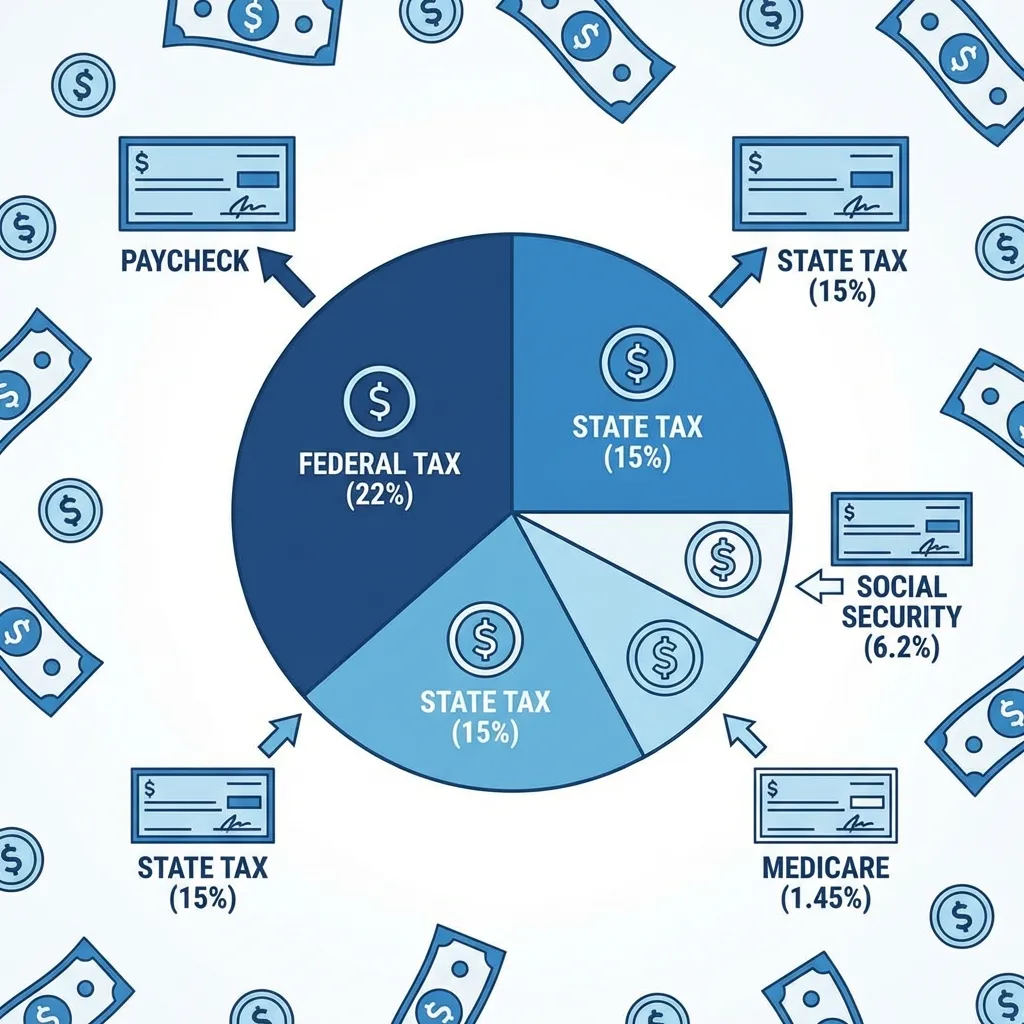
Payroll taxes can feel like a complex puzzle for any business owner, but understanding them is non-negotiable. As an employer, you're responsible for withholding a portion of your employees' wages and paying your share of certain taxes. Generally, employers pay about 7.65% for FICA taxes (Social Security and Medicare) on top of federal and state unemployment taxes, while also withholding an employee's 7.65% FICA share and income taxes. This varies significantly based on wages, state laws, and other factors.
Alright, let's talk payroll taxes. For ten years, I've watched countless small business owners wrestle with this exact question: "How much payroll tax do I really pay?" It's not just a number you can look up in a single chart, unfortunately. It's a blend of federal, state, and sometimes even local obligations. And here's the thing though — getting it wrong can lead to serious headaches, penalties, and even legal trouble. Nobody wants that.
So, let's break it down. We'll explore what you, as an employer, are on the hook for, and what you're just collecting on behalf of your employees. It's a distinction that often confuses people.
Understanding the Two Sides of Payroll Tax
Payroll taxes aren't a single, unified tax. They're a collection of taxes, each serving a different purpose. Some you pay directly from your business's pocket. Others, you withhold from your employees' paychecks and then remit to the proper authorities. Think of yourself as a tax collector for the government employee-paid taxes.
This distinction is fundamental. It impacts your budgeting, your cash flow, and ultimately, your bottom line.
Who Pays What? Employer vs. Employee Contributions
It's a shared responsibility. Both employers and employees contribute to the payroll tax system.
- Employer-Paid Taxes: These are direct costs to your business. They increase your overall labor costs beyond just wages.
- Employer's share of Social Security tax
- Employer's share of Medicare tax
- Federal Unemployment Tax Act (FUTA)
- State Unemployment Tax Act (SUTA)
- Some states or localities might have additional employer-specific taxes.
- Employee-Paid Taxes (Withheld by Employer): You deduct these from your employees' gross wages. You then send these withheld amounts to the government.
- Employee's share of Social Security tax
- Employee's share of Medicare tax
- Federal income tax withholding
- State income tax withholding (if applicable)
- Local income tax withholding (if applicable)
- Other mandated withholdings, like state disability insurance in some areas.
See? It's a bit of a mixed bag. But don't worry, we'll go through each of these in detail.
Federal Payroll Taxes: The Big Players
The federal government takes a significant slice. These are the taxes everyone deals with, regardless of their state.
FICA Taxes: Social Security and Medicare
FICA stands for Federal Insurance Contributions Act. These taxes fund Social Security (retirement, disability, survivor benefits) and Medicare (hospital insurance for the elderly and disabled). Both employers and employees contribute to FICA.
- Social Security Tax:
- The rate is 6.2% for employees and 6.2% for employers, totaling 12.4%.
- There's an annual wage base limit. For 2026, let's say (hypothetically, as the official 2026 limit isn't out yet, but it increases annually) it's $174,000. Any wages above this limit aren't subject to Social Security tax.
- Employees pay their 6.2%. Employers pay their 6.2%.
- Medicare Tax:
- The rate is 1.45% for employees and 1.45% for employers, totaling 2.9%.
- Good news (or bad, depending on your perspective): there's no wage base limit for Medicare. Every dollar an employee earns is subject to this tax.
- Additional Medicare Tax: If an employee earns above a certain threshold ($200,000 for single filers, $250,000 for married filing jointly), they'll pay an additional 0.9% Medicare tax. You, the employer, are responsible for withholding this additional tax, but you don't pay a matching employer share.
So, combined, the standard FICA rate is 7.65% for employees and 7.65% for employers (6.2% Social Security + 1.45% Medicare). That's your base federal payroll tax.
Federal Unemployment Tax Act (FUTA)
FUTA tax helps fund unemployment benefits for workers who lose their jobs. This one is employer-paid only. Your employees don't contribute to FUTA from their paychecks.
- The federal FUTA tax rate is 6.0% on the first $7,000 of each employee's wages.
- However, most employers get a significant credit of up to 5.4% if they pay their State Unemployment Tax Act (SUTA) taxes on time.
- This credit reduces your effective federal FUTA rate to just 0.6% on the first $7,000 of wages per employee. That's a maximum of $42 per employee per year ($7,000 x 0.006).
Quick sidebar: FUTA is a relatively small federal tax compared to FICA, but it's another piece of the puzzle. According to the IRS Publication 15, Employer's Tax Guide, this credit system is pretty standard across states.
Federal Income Tax Withholding
This is probably the biggest chunk deducted from an employee's paycheck. Federal income tax is progressive, meaning higher earners pay a higher percentage. You, as the employer, don't pay this tax directly; you withhold it from your employees' gross wages based on the information they provide on their W-4 form.
A properly filled-out W-4 is essential for accurate withholding. If an employee claims too many allowances, they might owe a big tax bill at year-end. If they claim too few, they might get a big refund, but they'll have less take-home pay throughout the year. It's a balancing act.
Need to create professional pay stubs to clearly show these withholdings? You can create your pay stub in minutes right after reading this. It's super helpful for both you and your employees to see exactly where the money's going.
State and Local Payroll Taxes: Adding Layers of Complexity
After federal taxes, you've got state and potentially local taxes to contend with. This is where things really start to vary.
State Unemployment Tax Act (SUTA)
Just like FUTA, SUTA taxes fund unemployment benefits, but at the state level. This is almost always an employer-paid tax, though a few states (like Alaska, New Jersey, and Pennsylvania) require a small employee contribution.
- SUTA rates vary wildly by state, industry, and your business's unemployment claim history.
- New employers often start with an "experience rate" that's an average for their industry.
- Over time, if you've few unemployment claims, your rate can decrease. If you've many, it can increase dramatically.
- The wage base for SUTA also differs by state. Some states use the federal $7,000, others go much higher. For example, in 2026, California might have a wage base of $7,000, while Washington State's could be over $67,000.
This is why blanket statements about payroll tax are impossible. Your SUTA rate is very specific to your business and location.
State Income Tax Withholding
Not all states have income tax. Currently, nine states don't tax wages: Alaska, Florida, Nevada, New Hampshire (only on interest/dividends, not wages), South Dakota, Tennessee (only on interest/dividends), Texas, Washington, and Wyoming.
For the other states, you'll need to withhold state income tax from your employees' paychecks. Like federal income tax, the amount depends on:
- The employee's gross wages.
- Their filing status and allowances (similar to a W-4, but for the state).
- The specific tax brackets of that state.
Many states have their own versions of the W-4 form. Make sure your employees fill them out correctly.
Other State and Local Taxes
Some states have additional employer-paid taxes, such as:
- State Disability Insurance (SDI): Required in California, Hawaii, New Jersey, New York, Rhode Island, and Puerto Rico. Employees typically contribute a small percentage of their wages.
- Paid Family Leave (PFL): Similar to SDI, offering benefits for family leave. Also seen in states like California, New Jersey, and New York.
- Local Income Taxes: A few cities or counties impose their own income taxes on wages. Think Philadelphia or New York City.
- Local Wage Taxes: Some municipalities might have a separate tax on wages paid to employees who live or work within their jurisdiction.
It's a lot to keep track of, I know. My best advice? Understand your specific state and local requirements. The payroll resources section on our site can be a great starting point for understanding compliance.
Self-Employment Tax: When You're Your Own Boss
OK, so what does this actually mean for owner-operators or independent contractors? If you're self-employed, an independent contractor, or an owner-operator, you don't have an employer withholding taxes for you. you're both the employer and the employee.
Real talk: You're responsible for paying both halves of the FICA taxes (the employer's 7.65% and the employee's 7.65%) directly to the IRS. This is called self-employment tax. The combined rate is 15.3% on your net earnings from self-employment, up to the Social Security wage base limit. The 2.9% Medicare portion applies to all your earnings.
This means a larger tax bill than you might expect, as you're covering what an employer would normally pay. We covered how to handle this in detail in our How To Pay Yourself As An Owner Operator guide. It's super important to set aside money for these taxes, often through estimated tax payments throughout the year.
Example: A Quick Calculation Snapshot
Let's put some numbers to this. This is a simplified example for one employee, for a single pay period.
Imagine an employee earns $1,000 gross wages in a week in a hypothetical state with a 3% state income tax, and the employer is eligible for the FUTA credit. Assume the Social Security wage base hasn't been hit.
| Tax Type | Rate | Employee Share (Withheld) | Employer Share (Paid by Business) | Notes |
|---|---|---|---|---|
| Federal FICA (Social Security) | 6.2% | $62.00 | $62.00 | On first $174,000 (hypothetical 2026 cap) |
| Federal FICA (Medicare) | 1.45% | $14.50 | $14.50 | No wage cap |
| Federal Income Tax | Varies (e.g., 10%) | $100.00 | $0.00 | Depends on W-4, progressive |
| Federal Unemployment (FUTA) | 0.6% | $0.00 | $6.00 | On first $7,000 per employee per year (after credit) |
| State Income Tax | 3% | $30.00 | $0.00 | Varies by state, based on employee W-4 equivalent |
| State Unemployment (SUTA) | 2% (example) | $0.00 | $20.00 | Varies by state, industry, and experience rating (on first $X wages) |
| Total Payroll Taxes | $206.50 | $102.50 |
In this example, for that $1,000 gross wage, the employee would have $206.50 withheld, and the employer would pay an additional $102.50 in taxes on top of the $1,000 wage.
Your actual numbers will depend on your specific circumstances, but this shows how it adds up.
Keeping Track: Why Pay Stubs Are
After all this talk about taxes, you might be wondering, "How do I show my employees all these deductions?" That's where pay stubs come in. A detailed pay stub isn't just a nice-to-have; it's often legally required. It provides a clear record of gross wages, all deductions (taxes, benefits, garnishments), and net pay.
Employees rely on pay stubs for income verification, loan applications, and understanding their earnings. As an employer, they're your record of compliance. If you ever need to create a pay stub for a contractor (which is different, by the way – we cover that in How To Create A Pay Stub For A Contractor), or just for your regular employees, having a reliable tool is key.
You can easily generate your paystub now to ensure you're providing clear, professional documentation. It helps everyone stay on the same page. A good check stub maker can save you a lot of time and effort in this area, making sure everything is correct and compliant.
Common Payroll Tax Mistakes to Avoid
In my experience, even seasoned business owners can trip up here. Avoiding these common pitfalls will save you a world of hurt.
- Misclassifying Employees as Independent Contractors: This is a big one. The IRS and Department of Labor take worker classification very seriously. If you misclassify an employee as a contractor, you could be on the hook for back taxes (both employer and employee portions), penalties, and interest. The rules are complex, looking at control over work, financial independence, and relationship type.
- Missing Payment Deadlines: Federal payroll taxes (Form 941 deposits) are typically due monthly or semi-weekly, depending on your tax liability. State taxes have their own schedules. Missing these deadlines means penalties. Don't do it!
- Incorrectly Calculating Withholdings: Relying on outdated W-4s or miscalculating can lead to employees underpaying or overpaying, causing issues for them and potentially you. Encourage employees to review their W-4 annually, especially if their life circumstances change.
- Not Staying Up-to-Date on Rate Changes: Tax rates, wage bases, and specific regulations can change yearly. Don't assume last year's numbers are still valid. You need to keep an eye on official announcements from the IRS and your state's revenue department. (Did you know there's a payroll glossary that can help you keep up with all the terms?)
- Neglecting State-Specific Requirements: Just because you understand federal taxes doesn't mean you're covered for your state. Each state is unique, with its own forms, rates, and reporting requirements. This is where a good local accountant or payroll service can be invaluable.
Are you getting the sense that this is a detailed process? It really is.
Frequently Asked Questions
What's the difference between FICA and FUTA taxes?
FICA taxes (Social Security and Medicare) are shared by both employees and employers, funding retirement, disability, and healthcare benefits. FUTA taxes, on the other hand, are paid only by employers and contribute to the unemployment insurance fund. They serve different purposes and have different rates and wage bases.
How often do I've to pay payroll taxes?
It depends on the amount of tax you owe. Federal payroll taxes (FICA and federal income tax withholding) are generally paid either monthly or semi-weekly. Smaller employers might pay quarterly. State taxes have their own schedules, which can also be monthly, quarterly, or semi-annually based on your tax liability.
Can I reduce my payroll tax burden?
For employer-paid taxes, options are limited as rates are set by law. However, ensuring accurate worker classification and taking advantage of any state-specific credits or programs can help. For employee-paid taxes, certain pre-tax deductions like 401(k) contributions or health insurance premiums can reduce their taxable income, lowering their overall tax withholding.
What happens if I don't pay my payroll taxes on time?
Not paying payroll taxes on time or accurately is a serious issue. The IRS can impose substantial penalties for late deposits, underpayments, or failure to file. There can also be state penalties. In severe cases, business owners can even face personal liability for unpaid payroll taxes, known as the Trust Fund Recovery Penalty.
Sources
- Employer's Tax Guide (Publication 15) — Internal Revenue Service
- Social Security Tax Rates — Social Security Administration
- Fair Labor Standards Act (FLSA) — U.S. Department of Labor
- Small Business Payroll Tax Guide — Gusto
- Self-Employment Tax Guide — Investopedia
- Understanding Employment Taxes — QuickBooks
Your Next Steps for Payroll Tax Confidence
Payroll taxes are a fundamental part of running a business. Don't let them intimidate you. Your goal should be accuracy and timely payments. Set up a system, whether it's with payroll software, a dedicated accountant like myself, or a payroll service, to ensure you're always compliant.
Start by clearly understanding your federal obligations, then drill down into your specific state and local requirements. And critically, keep excellent records. Every pay stub, every deposit receipt, every tax form. If you need a professional pay stub right now, you can make your check stub today to ensure your employees (and your records!) are always up-to-date and accurate. Staying informed and organized is your best defense against payroll tax woes.

About ValidPaystubs Editorial Team
Articles on ValidPaystubs are written and maintained by the editorial team at Sweethelp LLC, the company that operates this site from Sheridan, WY. We are a small team, not a firm of accountants — we build the tool and document how US payroll figures work, citing the IRS and state revenue departments so you can check any number against its source. Nothing here is tax, legal or financial advice, and for a decision that matters you should talk to a licensed professional.
View Profile