Can I Use Pay Stubs to File Taxes?

No, you can't use pay stubs to officially file your taxes with the IRS. While pay stubs provide a snapshot of your earnings and withholdings, the IRS requires Form W-2, Wage and Tax Statement, from your employer. This form summarizes your annual income and taxes withheld for the entire year.
Countless questions pop up around tax season. One of the most common ones I hear, without fail, is about pay stubs and tax filing. It's a natural assumption, isn't it? You get paid, you get a stub, it shows your money. Why wouldn't that be enough for the IRS?
Real talk: The IRS is really specific about what they need. Pay stubs are fantastic for tracking your income throughout the year, checking your deductions, and making sure your benefits are correct. They're like a progress report. But the final exam – filing your taxes – you need the official transcript: your W-2.
Pay Stubs vs. W-2: Why the Difference Matters
Let's clear this up right away. Your pay stub is a record for you and your employer. It details your gross pay, net pay, and all the deductions for a specific pay period. Think of it as a snapshot of one moment in time.
The W-2, on the other hand, is the official summary. It covers your entire calendar year's earnings and all the taxes withheld from your pay. Employers have a legal obligation to send you this form by January 31st each year for the preceding tax year. This date is non-negotiable.
Here's why the W-2 is so important:
- Official Reporting: It's the document your employer sends directly to the Social Security Administration (SSA) and the IRS. The numbers on your W-2 match what the government already expects to see from you.
- Accuracy: While your pay stub is generally accurate, it's possible for year-end adjustments, bonuses, or certain pre-tax deductions to be finalized or updated on the W-2 in a way that wasn't fully reflected on your very last pay stub of the year. The W-2 captures everything for the full year.
- Specific Boxes: The W-2 has specific boxes for wages, Social Security wages, Medicare wages, federal income tax withheld, state income tax withheld, and local taxes. Tax software and preparers rely on these exact box numbers to correctly calculate your tax liability.
- Employer Identification: It clearly identifies your employer and their Employer Identification Number (EIN), which is critical for tax filing.
Are you getting paid what you should be? Are your deductions making sense? If you need a reliable way to track your earnings, you could always create your pay stub in minutes. It's a great personal finance tool.
When Pay Stubs Can Be Helpful (But Still Not for Filing)
Okay, so you can't file with them. That's settled. But don't toss those pay stubs! They're still incredibly useful for other things. In my experience, I've seen clients use them for:
- Proof of Income: Applying for a loan? A mortgage? Renting a new apartment? Lenders and landlords almost always ask for recent pay stubs as proof you can afford the payments. We've even covered this in detail in our article How Many Pay Stubs For Mortgage. They demonstrate a consistent income stream. Need to verify your income quickly? Consider using a proof of income generator to create official-looking documents.
- Budgeting: They're excellent for personal financial planning. You can see exactly how much you're bringing home and where your money is going (taxes, health insurance, 401k contributions).
- Checking W-2 Accuracy: Once your W-2 arrives, you can compare it against your final pay stub or a summary of all your pay stubs for the year. This helps catch potential errors. If there's a discrepancy, you'll want to contact your employer's HR or payroll department immediately.
- Dispute Resolution: Should there ever be a wage dispute or an issue with your employer, your detailed pay stubs provide a chronological record of your earnings and deductions.
- Claiming Benefits: Applying for unemployment, workers' compensation, or disability often requires recent pay stubs to calculate your benefit amount.
Quick sidebar: For certain loans, like personal loans, having your pay stubs is often a requirement. Our guide Do I Need Check Stubs For A Personal Loan dives into that.
What if You Don't Have Your W-2?
It happens. Maybe it got lost in the mail. Maybe you moved and forgot to update your address with your old employer. Perhaps you left a job mid-year. Don't panic. You've got options.
Here's what you should do:
- Contact Your Employer: This is always the first step. Reach out to your HR or payroll department. Most companies can provide you with a copy, often electronically through an employee portal. Remember, they've until January 31st to mail it. If it's past mid-February, it's definitely time to call.
- Contact the IRS: If you've tried contacting your employer and still haven't received your W-2 by late February, you can call the IRS directly. They might be able to help you by contacting your employer or providing instructions on what to do. You can reach them at 1-800-829-1040.
- Use Form 4852: If April 15th (or the specific tax deadline for the year, sometimes it shifts) is looming and you still don't have your W-2, you can file Form 4852, "Substitute for Form W-2, Wage and Tax Statement." This form allows you to estimate your wages and withholdings using your pay stubs and other records. You'll need to explain why you couldn't get your W-2. This is a last resort, though, as it might raise questions with the IRS if your estimates are significantly off.
A Look at Key Tax Documents
To truly understand why the W-2 is so important, let's compare it to your pay stub and another common tax document, the 1099-NEC.
| Feature | Pay Stub | Form W-2 (Wage and Tax Statement) | Form 1099-NEC (Nonemployee Compensation) |
|---|---|---|---|
| Purpose | Proof of earnings for a single pay period | Annual summary of wages and taxes withheld | Annual summary of payments to independent contractors |
| Issuer | Employer | Employer | Payer (e.g., client, company you did work for) |
| Recipient | Employee | Employee, IRS, SSA | Independent Contractor, IRS |
| For Filing Taxes? | No (only for estimates/proof of income) | Yes (required for employees) | Yes (required for contractors) |
| Timing | Every pay period | By January 31st for prior year | By January 31st for prior year |
| Example Info | Gross pay, net pay, deductions, YTD totals | Total wages, federal/state/local taxes withheld, SS/Medicare wages | Total nonemployee compensation |
| Taxes Withheld? | Yes (federal, state, local, SS, Medicare) | Yes (all employment taxes) | No (contractors pay estimated taxes themselves) |
This table makes it pretty clear, doesn't it? If you're an employee, your W-2 is king. If you're an independent contractor, you'll be looking for a 1099-NEC if you earned over $600 from a client. Many people have a mix of W-2 and 1099 income. In that case, you'll need both.
Don't forget, understanding common payroll terms can really help. Our payroll glossary is a great resource.
Understanding Withholdings and Deductions
Your pay stub shows your withholdings for each pay period. These are the amounts your employer takes out of your paycheck and sends to the government on your behalf. This includes:
- Federal Income Tax: This goes to the IRS.
- State Income Tax: If your state has one.
- Local Income Tax: Some cities or counties have these.
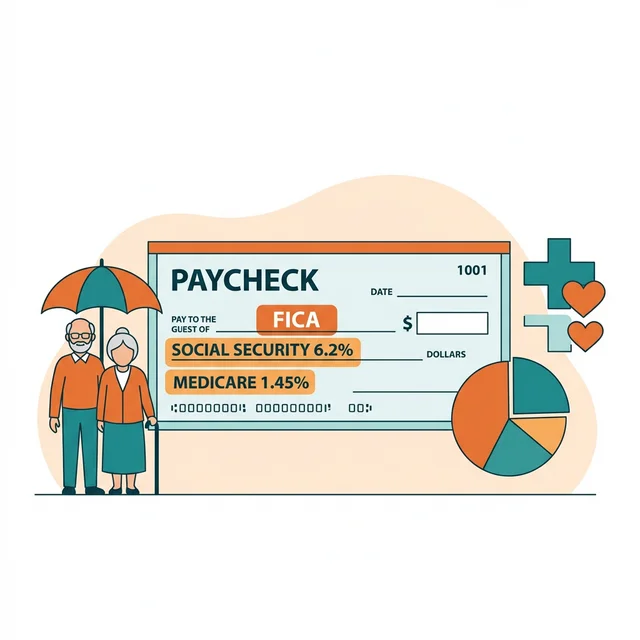
- Social Security Tax: In 2026, the employee share is 6.2% of your wages up to the annual limit.
- Medicare Tax: This is 1.45% of all your wages, with no income limit.
- Some higher earners might also pay an Additional Medicare Tax.
Your W-2 will consolidate these amounts for the entire year. It also reports things like contributions to a 401(k) or health savings account (HSA), which are for your tax deductions.
Here's the thing though — having all your pay stubs can help you estimate your tax refund or amount due well before your W-2 arrives. You can add up all the "federal tax withheld" boxes from your stubs and get a pretty good idea. It's not exact, but it's a start.
Are you managing your own small business payroll? Or maybe you're a freelancer trying to keep things straight. Using free payroll tools can be a real lifesaver.
The Importance of Reviewing Your W-2
When that W-2 finally lands in your hands (or inbox), don't just shove it into your tax folder. Take a few minutes to review it carefully.
Check these items:
- Your Name and Address: Make sure they're correct. Simple errors can cause delays.
- Social Security Number: This is absolutely critical. A wrong SSN will cause major issues with the IRS and SSA.
- Employer's Name and EIN: Again, these should match your records.
- Box 1 (Wages, Tips, Other Compensation): Does this look about right compared to your total annual gross pay from your pay stubs?
- Boxes 2 (Federal Income Tax Withheld), 4 (Social Security Tax Withheld), 6 (Medicare Tax Withheld): Do these amounts align with your year-to-date totals on your final pay stub?
If you spot any errors, contact your employer's payroll department immediately. They'll need to issue a corrected W-2, often called a W-2c. It's much easier to fix these things before you file.
And yes, sometimes employers make mistakes, especially smaller businesses. If you're running a business and need to ensure accurate payroll, an online paystub maker can help you generate precise documents for your team.
Frequently Asked Questions
Can I use my last pay stub to file taxes?
No, you can't use your last pay stub to file taxes. The IRS requires Form W-2, Wage and Tax Statement, which provides a full annual summary of your wages and taxes withheld, including any year-end adjustments not reflected on a single pay stub.
What do I do if my W-2 is incorrect?
If your W-2 has errors, contact your employer's HR or payroll department as soon as possible. they're responsible for issuing a corrected W-2 (Form W-2c). don't file your taxes with an incorrect W-2, as this can lead to delays or issues with the IRS.
What's the deadline for employers to send W-2s?
Employers are legally required to send W-2 forms to their employees by January 31st of the year following the tax year. For example, for the 2025 tax year, W-2s must be sent out by January 31, 2026.
Can I file taxes without a W-2 if I know my income?
While you might know your income, the IRS still needs the official W-2 form because it contains specific categorized income and withholding amounts reported by your employer. If you absolutely can't get your W-2, you can use Form 4852 as a substitute, but this should only be done as a last resort.
Getting Ready for Tax Season
So, while your pay stubs are incredibly valuable for personal financial management and verification (like when you need to make your check stub today for a loan application), they just don't cut it for filing your annual income tax return. You need that official W-2. Make sure you've got it, check it for accuracy, and keep it safe. If it doesn't arrive by early February, be proactive. Don't wait until the last minute. Being prepared makes tax season a lot less stressful, trust me on that one.
Sources
- Employer's Tax Guide (Publication 15) — Internal Revenue Service
- Form W-2, Wage and Tax Statement — Internal Revenue Service
- Understanding Your W-2 Form — Investopedia
- Social Security Tax and Medicare Tax Rates — U.S. Social Security Administration
- Payroll Tax Compliance — ADP
- What to Do If You Don't Receive Your W-2 — QuickBooks

About ValidPaystubs Editorial Team
Articles on ValidPaystubs are written and maintained by the editorial team at Sweethelp LLC, the company that operates this site from Sheridan, WY. We are a small team, not a firm of accountants — we build the tool and document how US payroll figures work, citing the IRS and state revenue departments so you can check any number against its source. Nothing here is tax, legal or financial advice, and for a decision that matters you should talk to a licensed professional.
View Profile