Understanding FICA on Your Paycheck: Social Security & Medicare Explained
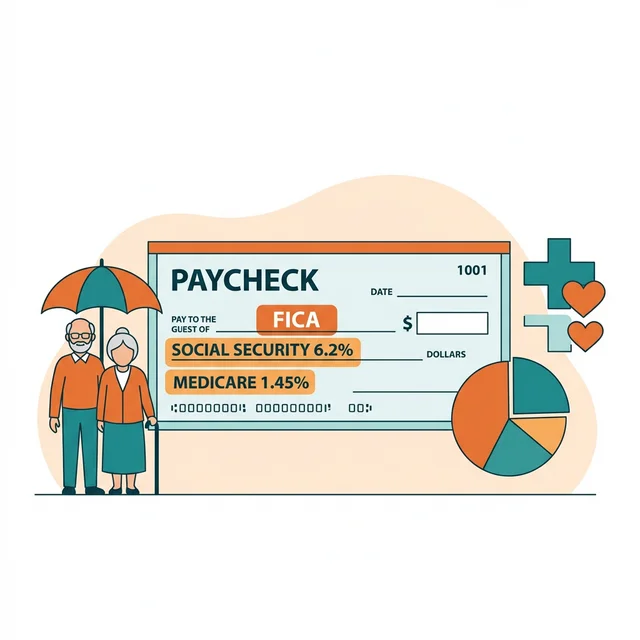
FICA stands for the Federal Insurance Contributions Act. It's a mandatory payroll tax withheld from your earnings to fund two essential federal programs: Social Security and Medicare. These contributions ensure you'll have retirement, disability, and survivor benefits, plus healthcare coverage, later in life.
A decade helping employees understand their paychecks. One of the most common questions I get is about FICA. People see "SS Tax" and "Med Tax" and wonder, "What is that money for?" It's a good question. That line item isn't just a deduction; it's an investment in your future. And the nation's.
What's FICA Anyway? The Foundation of Social Security and Medicare
When you see FICA on your pay stub, you're looking at your contribution to America's social safety net. It's not optional. It’s the law. These funds directly support millions of Americans. They've paid into the system for years.
Social Security provides benefits for retirees, people with disabilities, and survivors of deceased workers. It's been around since 1935. Think of it as a broad-based insurance program. Medicare, established in 1965, provides health insurance for Americans aged 65 or older, and for some younger people with disabilities. It covers hospital stays, doctor visits, and prescription drugs, depending on the plan.
OK, so what does this actually mean for your take-home pay?
Breaking Down the FICA Tax Rates
FICA isn't one flat rate. It's actually two separate taxes rolled into one: Social Security tax and Medicare tax. Both you and your employer contribute. This split helps ease the burden on individual workers.
Here's the thing though — the specific rates for these taxes can change. Congress adjusts them sometimes. The Social Security Administration typically updates the wage base annually.
Let's break down the current FICA rates for 2026:
- Social Security Tax: This part is 6.2% of your gross wages. Your employer also pays 6.2%. That's a total of 12.4% going into the Social Security fund.
- There's a catch here: the Social Security tax only applies up to an annual wage base limit. For example, for 2026, let's say the wage base is $168,600. Any earnings above that amount aren't subject to the Social Security tax. (The exact wage base for 2026 will be announced later, but it rises annually, as noted by the Social Security Administration).
- Medicare Tax: This portion is 1.45% of all your gross wages. There's no wage base limit for Medicare. Your employer also pays 1.45%. This makes a combined 2.9% for Medicare.
So, as an employee, you're responsible for 7.65% of your gross pay (6.2% for Social Security + 1.45% for Medicare). Your employer matches that 7.65%. It's a pretty big chunk of change when you think about it.
Here's a quick summary of the FICA breakdown:
| FICA Component | Employee Rate | Employer Rate | Combined Rate | Wage Base Limit (2026 est.) |
|---|---|---|---|---|
| Social Security Tax | 6.2% | 6.2% | 12.4% | Up to $168,600 |
| Medicare Tax | 1.45% | 1.45% | 2.9% | No limit |
| Total FICA | 7.65% | 7.65% | 15.3% | N/A |
The Additional Medicare Tax
But wait, there's another layer. High-income earners face an additional Medicare tax. If your wages exceed certain thresholds, you'll pay an extra 0.9% in Medicare tax. These thresholds are:
- $200,000 for single filers
- $250,000 for married filing jointly
- $125,000 for married filing separately
Your employer doesn't match this additional tax. It's solely an employee responsibility. This ensures those with higher incomes contribute a bit more to the healthcare system.
How FICA Appears on Your Paycheck
You'll spot FICA deductions easily on your pay stub. Most payroll systems will list them separately. Look for lines labeled:
- "SS Tax" or "Social Security"
- "Med Tax" or "Medicare"
- Sometimes, it might just be "FICA" if the system groups them.
It's really important to review your pay stubs regularly. They're not just for confirming your pay. They show all your deductions, including FICA, federal, state, and local taxes, and any benefit contributions. If you need a professional pay stub right now, you can create one in under 2 minutes. Understanding these deductions helps you verify accuracy and plan your personal budget. We covered how important it's to have clear documentation in our guide on how to make paystub, for instance.
Why Do We Pay FICA? The Benefits to You
Real talk: nobody loves seeing money taken out of their paycheck. But FICA funds provide a critical safety net. They're designed to protect you and your family from financial hardship later in life or if unexpected events occur.
Consider the benefits:
- Retirement Income: Social Security provides a steady income stream when you stop working. It might not be enough on its own, but it's a foundational piece of most retirement plans.
- Disability Insurance: If you become unable to work due to a severe disability, Social Security Disability Insurance (SSDI) can provide income. This is a huge comfort.
- Survivor Benefits: If you pass away, your spouse or children may be eligible for benefits. These can provide support during a difficult time.
- Healthcare in Retirement: Medicare provides essential health insurance coverage once you turn 65. Healthcare costs can be staggering, so this is a major financial protector.
In my experience, many people, especially younger workers, don't think they'll ever use these benefits. But life happens. Illnesses strike. Markets fluctuate. FICA is a collective insurance policy for all of us.
FICA for the Self-Employed: The SECA Difference
If you're self-employed – maybe you're a freelancer, a contractor, or a small business owner – you're still responsible for FICA taxes. But it's handled differently. This is called the Self-Employment Contributions Act (SECA).
Instead of having an employer pay half, you pay both the employee and employer portions yourself. That means you're on the hook for the full 15.3% (12.4% for Social Security + 2.9% for Medicare) of your net earnings from self-employment. Ouch. This is why self-employment taxes feel so high.
The good news? You can deduct one-half of your self-employment tax from your gross income when calculating your adjusted gross income (AGI). This helps offset some of the burden. It's a small silver lining.
Self-employed individuals must pay these taxes quarterly through estimated tax payments. Forgetting to do this can lead to penalties. It's a common mistake I've seen. A paycheck calculator can really help estimate these payments accurately. Many independent contractors also use an online paystub maker to document their earnings for financial planning and loan applications.
Common FICA Questions & Misconceptions
People have many questions about FICA. Let's tackle a few.
What if I earn over the Social Security wage base?
As we discussed, once your earnings hit the annual Social Security wage base limit (e.g., $168,600 for 2026), your Social Security tax deductions stop for the rest of the year. Your Medicare tax deductions continue, though, because there's no wage base limit for Medicare. It's a nice little break for high earners, even if it's temporary.
Does FICA ever change?
Yes, it does. The Social Security wage base typically increases each year. This is to keep pace with inflation and wage growth. The rates themselves (6.2% and 1.45%) are set by Congress and don't change as frequently. However, Congress can adjust them. This happens usually through legislation.
What if I don't think I'll ever use Social Security or Medicare?
This is a common sentiment, especially among younger workers. The system, however, relies on current workers contributing to support current beneficiaries. It's a pay-as-you-go system. Your contributions ensure that your parents, grandparents, and maybe even your future self will have these benefits. It's a social contract.
Managing Your Payroll and Understanding Deductions
Understanding FICA is just one piece of the payroll puzzle. Knowing all your deductions helps you plan your finances better. It also helps with things like applying for a loan or an apartment. Lenders and landlords need proof of income apartments, and a well-understood pay stub is key.
If you're an employer, accurate FICA withholding is non-negotiable. Mistakes can lead to penalties from the IRS. That's never fun. Many small businesses use free payroll tools to manage these complexities. They simplify compliance.
As an employee, always keep copies of your pay stubs. They serve as official records of your earnings and deductions. You might need them for tax purposes or to verify employment. Using professional templates can help ensure your pay stubs are clear and easy to understand. Want to learn more about payroll? Check out our payroll blog for deep dives into other topics!
Review your W-2 at the end of the year. Make sure the FICA wages and taxes match what you saw on your pay stubs. If something looks off, talk to your HR department or payroll administrator immediately. It's your money. Protect it.
Frequently Asked Questions
What's the main difference between Social Security and Medicare taxes?
Social Security tax funds retirement, disability, and survivor benefits, applying only up to an annual wage limit. Medicare tax, conversely, funds healthcare for older and disabled individuals and applies to all your earnings without any wage limit.
Can I opt out of FICA taxes?
No, FICA taxes are mandatory for almost all employees and self-employed individuals. It's a federal requirement designed to fund essential social insurance programs, meaning you can't choose not to contribute.
What happens if my employer doesn't withhold FICA taxes?
If your employer fails to withhold FICA taxes, they're still liable for both the employee and employer portions. As an employee, you might also be held responsible for your share of unpaid FICA taxes, along with potential penalties.
How does FICA affect my tax return?
FICA taxes are deducted from your gross pay before income tax calculations. they're separate from federal income tax. The FICA amounts withheld are reported on your W-2 form, but you don't typically deduct them again when filing your federal income tax return.
Sources
- Employer's Tax Guide (Publication 15) — Internal Revenue Service
- Social Security Wage Base Updates — Social Security Administration
- Self-Employment Tax (SE Tax) — Internal Revenue Service
- what's FICA? — Investopedia
- Payroll Taxes — U.S. Department of Labor

About ValidPaystubs Editorial Team
Articles on ValidPaystubs are written and maintained by the editorial team at Sweethelp LLC, the company that operates this site from Sheridan, WY. We are a small team, not a firm of accountants — we build the tool and document how US payroll figures work, citing the IRS and state revenue departments so you can check any number against its source. Nothing here is tax, legal or financial advice, and for a decision that matters you should talk to a licensed professional.
View Profile