Understanding Your Paycheck: How Much Goes to Taxes?

The portion of your paycheck going to taxes varies significantly based on income, location, and filing status. On average, most Americans see 25-35% of their gross pay deducted for federal, state, and local taxes, along with other pre-tax contributions. This percentage fluctuates widely by individual circumstance.
Ever ripped open your pay envelope, or clicked open your digital paystub, and thought, "Wait, where did all that money go?" You're not alone. It's a question that comes up constantly. Employees often focus on their gross salary, the big number they negotiated, only to be surprised by the smaller amount that actually hits their bank account. That gap between gross pay and net pay can feel like a black hole.
But it's not magic, it's just taxes and deductions. Let's pull back the curtain on how your take-home pay gets calculated. Understanding this helps you budget better and even make smarter financial choices.
Deconstructing Your Paycheck: Gross vs. Net
First things first: gross pay versus net pay. Your gross pay is the total amount your employer agrees to pay you before any deductions. Think of it as your full earnings. Net pay, also called take-home pay, is what's left after all the deductions are subtracted. It's the money you actually get to spend.
Why is there such a difference? Taxes. Lots of them. Plus, other important deductions.
The Big Players: Federal Taxes
These are the non-negotiables for almost every working American. Uncle Sam wants his share.
Federal Income Tax
This is usually the biggest bite out of your paycheck. The U.S. has a progressive tax system. What does that mean? Higher earners pay a higher percentage of their income in taxes. Tax brackets determine your rate. Your employer estimates how much federal income tax to withhold from each paycheck based on the information you provide on your Form W-4. Ever wondered how those numbers get on your pay stub? This is how.
FICA Taxes: Social Security and Medicare
FICA stands for Federal Insurance Contributions Act. These are dedicated taxes for Social Security and Medicare. Both you and your employer contribute to these programs.
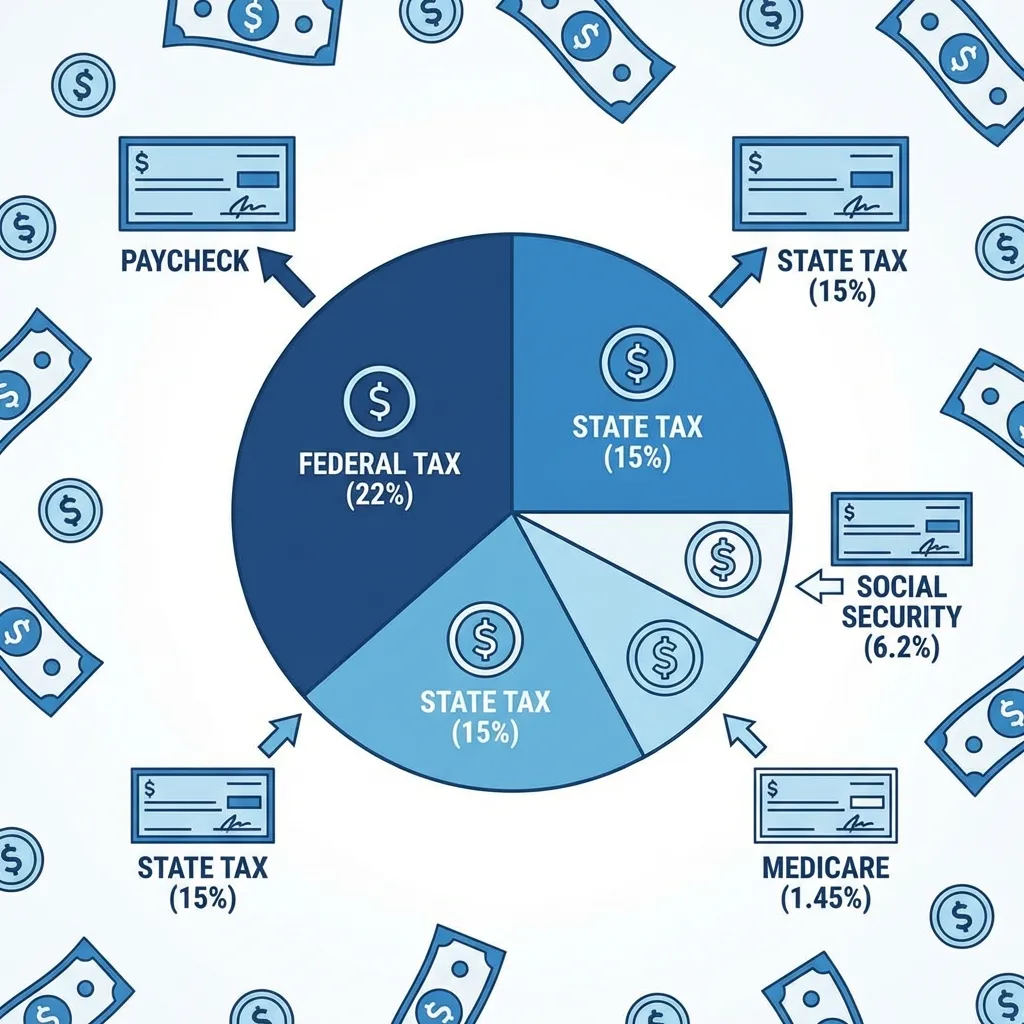
- Social Security: This provides benefits for retirees, the disabled, and survivors. The tax rate is 6.2% of your gross wages, up to an annual earnings limit (which is $168,600 for 2024, for example). Your employer pays another 6.2%.
- Medicare: This funds health insurance for people aged 65 or older, and for some younger people with disabilities. The tax rate is 1.45% of all your gross wages, with no income limit. Your employer also pays another 1.45%.
So, combined, your FICA taxes are 7.65% of your wages (up to the Social Security cap). This is a fixed percentage, so you'll see it consistently on your paystub. For a deeper look, the Social Security Administration provides a fact sheet on their programs.
State and Local Taxes: The Geography of Deductions
Federal taxes are just the beginning. Your physical location plays a huge role in what else comes out.
State Income Tax
Not all states have this. Nine states currently don't collect state income tax: Alaska, Florida, Nevada, New Hampshire (only on interest and dividends), South Dakota, Tennessee (only on interest and dividends), Texas, Washington, and Wyoming. If you live in one of the other 41 states, you'll see a state income tax deduction. These rates vary wildly, from flat taxes in some states to progressive systems in others, just like federal taxes. California, for instance, has some of the highest state income tax rates.
Local Income Tax
Some cities and counties also impose their own income taxes. Think of places like New York City, Philadelphia, or many cities in Ohio. These are usually smaller percentages but definitely add up. They often help fund local services like schools and public works.
State Disability Insurance (SDI) / Paid Family Leave (PFL)
A few states, like California, New Jersey, and New York, have mandatory state programs that provide short-term disability benefits or paid family leave. Employees contribute a small percentage of their wages to these programs. In California, for example, the SDI rate changes annually but usually sits around 1.1% of wages up to a certain limit.
Beyond Taxes: Other Common Paycheck Deductions
It's not all taxes, though it can feel like it. Many deductions are actually for benefits or other obligations.
- Health Insurance Premiums: If you get health insurance through your employer, your portion of the premium is usually deducted pre-tax. This is a big one for many families.
- Retirement Contributions: Your 401(k), 403(b), or other employer-sponsored retirement plan contributions are typically taken out pre-tax. This reduces your taxable income, which is a smart move!
- Health Savings Accounts (HSAs) and Flexible Spending Accounts (FSAs): These accounts let you set aside money pre-tax for healthcare or dependent care expenses. Another great way to reduce your taxable income.
- Life Insurance or Disability Insurance: Premiums for these benefits are often deducted directly from your paycheck.
- Union Dues: If you're part of a union, your dues will be deducted.
- Wage Garnishments: In some cases, if you've outstanding debts (like child support, student loans, or unpaid taxes), a court order might require your employer to withhold a portion of your wages.
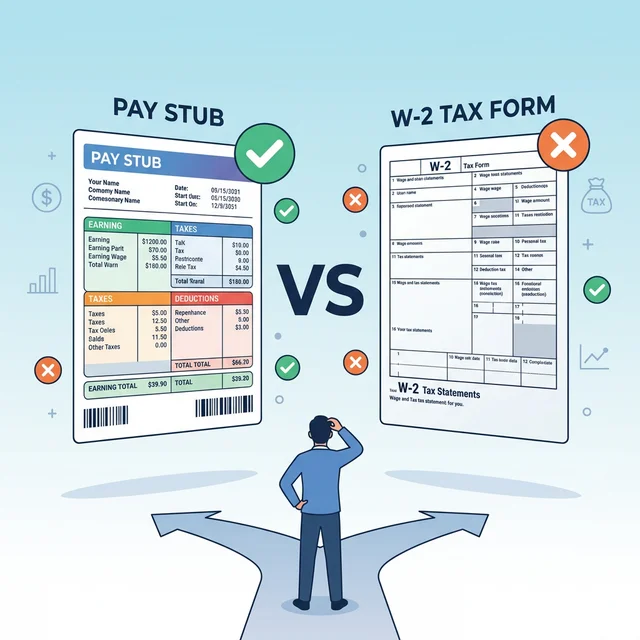
Quick sidebar: All these deductions, whether tax-related or benefit-related, are clearly listed on your pay stub. It's a critical document for understanding your finances. If you're a small business owner or need to create a professional record of these deductions, a check stub maker can be incredibly helpful. You can often find professional templates to ensure your paystubs look polished and contain all necessary details.
How Your Withholding is Determined (and Why it Matters)
Your employer doesn't just guess how much federal income tax to take out. They use the information from your Form W-4, Employee's Withholding Certificate, which you fill out when you start a new job or want to adjust your withholding. This form helps your employer calculate the correct amount of tax to send to the IRS on your behalf.
Here's the thing though — many people just "set it and forget it" with their W-4. This can lead to big tax refunds (meaning you overpaid throughout the year) or, worse, a big tax bill come April. I've seen clients shocked by a massive tax bill because they didn't adjust their W-4 after a major life event, like getting married or having a child.
Why review your W-4?
- Life Changes: Marriage, divorce, having a baby, buying a house. These all impact your tax situation.
- Second Job: If you or your spouse have multiple jobs, you might need to adjust your withholding to avoid underpayment.
- Side Gigs: Income from freelancing or a side business isn't subject to employer withholding. You might need to make estimated tax payments quarterly. (We covered this in detail in our guide on How Do I Create A Pay Stub For Self Employed).
- Desired Refund: Some people prefer a large refund, others prefer more money in each paycheck.
The IRS has a fantastic Tax Withholding Estimator tool on their website. I can't recommend it enough. It helps you fine-tune your W-4.
A Hypothetical Paycheck Breakdown (Example)
Let's look at an example. Imagine "Alex" earns $60,000 annually ($5,000 gross per month), is single, lives in a state with a 5% income tax, and contributes to health insurance and a 401(k).
| Deduction Category | Monthly Amount (Approx.) | Notes |
|---|---|---|
| Gross Pay | $5,000.00 | |
| Federal Income Tax (estimated) | $450.00 | Varies based on W-4 and tax bracket |
| Social Security (6.2%) | $310.00 | Based on $5,000 gross |
| Medicare (1.45%) | $72.50 | Based on $5,000 gross |
| State Income Tax (5%) | $250.00 | Flat 5% for simplicity |
| Health Insurance Premium | $150.00 | Pre-tax deduction |
| 401(k) Contribution (5%) | $250.00 | Pre-tax deduction, reduces taxable income |
| Total Deductions | $1,482.50 | |
| Net Pay (Take-Home) | $3,517.50 |
In this example, Alex's total deductions are $1,482.50, meaning roughly 29.65% of their gross pay goes to taxes and other deductions. That's a lot! But remember, the 401(k) and health insurance are valuable benefits, not just "lost" money.
Factors That Significantly Affect Your Tax Bite
Many things impact your ultimate take-home pay.
- Your Income Level: The more you earn, the higher your tax bracket might be for federal and state income taxes.
- Filing Status: Single, Married Filing Jointly, Head of Household — these change your standard deduction and tax bracket thresholds.
- Dependents: Having children or other dependents can open up tax credits and deductions.
- Pre-Tax Deductions: Contributions to 401(k)s, HSAs, or health insurance premiums reduce your taxable income, effectively lowering your tax burden.
- State of Residence: This is a big one. Moving from a high-tax state to a no-income-tax state can dramatically increase your net pay.
- Tax Credits and Deductions: Beyond payroll withholding, certain expenses (like student loan interest, mortgage interest, or education expenses) can reduce your overall tax liability when you file your annual return.
Real talk: Understanding your pay stub is the first step toward financial literacy. Each line item tells a story about where your money is going. If you don't receive one, or if you're self-employed and need a record of your income and deductions, you can create your pay stub in minutes. It's a fundamental financial document.
Frequently Asked Questions
What's the average percentage of a paycheck that goes to taxes?
On average, most individuals see between 25% and 35% of their gross paycheck deducted for various taxes and other contributions. This range includes federal income tax, FICA taxes (Social Security and Medicare), and often state and local income taxes. The exact percentage depends heavily on your specific income level, where you live, and your chosen withholding settings.
Why do I pay both Social Security and Medicare taxes?
You pay both Social Security and Medicare taxes because they fund two separate, but related, federal programs. Social Security provides retirement, disability, and survivor benefits, while Medicare funds health insurance for eligible individuals, primarily those 65 and older or with certain disabilities. These are mandatory contributions that both employees and employers share.
Can I adjust how much tax is withheld from my paycheck?
Yes, you absolutely can adjust your tax withholding. You do this by submitting a new Form W-4 (Employee's Withholding Certificate) to your employer. Changing your W-4 allows you to claim more allowances or specify an additional amount to be withheld, which will affect your net pay. It's a good idea to review your W-4 annually or after any significant life event.
What's the difference between pre-tax and post-tax deductions?
Pre-tax deductions are subtracted from your gross pay before taxes are calculated, which reduces your taxable income. Examples include 401(k) contributions, health insurance premiums, and HSA contributions. Post-tax deductions are taken out after taxes have been calculated on your gross pay. Examples include Roth 401(k) contributions, union dues, or wage garnishments.
Taking Control of Your Take-Home Pay
It's clear that a significant chunk of your earnings disappears before it even hits your bank account. But you aren't completely powerless. you've options.
First, review your W-4. Seriously, do it. Use the IRS's online estimator. This simple action can prevent surprises at tax time. Second, understand your pay stub. It's not just a receipt; it's a detailed financial statement. Know what each deduction means. If you're unsure about any line item, ask your HR department. That's what we're here for!
Finally, consider pre-tax benefits. Maxing out your 401(k) or contributing to an HSA isn't just saving for the future; it's also lowering your current taxable income. It's a win-win. If you need a professional record of your earnings and deductions, remember you can always generate your paystub now.
Understanding how much paycheck goes to taxes might feel complex, but it's a fundamental part of managing your personal finances. Empower yourself with this knowledge.
Sources
- Form W-4, Employee's Withholding Certificate — Internal Revenue Service
- Social Security and Medicare Tax Rates — U.S. Social Security Administration
- what's a Pay Stub? Understanding Your Paycheck — ADP
- Fair Labor Standards Act (FLSA) — U.S. Department of Labor
- Understanding Employment Taxes — QuickBooks

About ValidPaystubs Editorial Team
Articles on ValidPaystubs are written and maintained by the editorial team at Sweethelp LLC, the company that operates this site from Sheridan, WY. We are a small team, not a firm of accountants — we build the tool and document how US payroll figures work, citing the IRS and state revenue departments so you can check any number against its source. Nothing here is tax, legal or financial advice, and for a decision that matters you should talk to a licensed professional.
View Profile